Cooking shouldn’t leave you exhausted before dinner even hits the table. An intelligently planned ergonomic kitchen design layout transforms meal preparation from a physically demanding chore into a smooth, enjoyable process that works with your body rather than against it. The right kitchen configuration can reduce physical strain by up to 40% during food preparation tasks, making daily cooking more efficient and comfortable. Whether you’re renovating your current kitchen or planning a new build, understanding how to implement proper ergonomic principles ensures your kitchen supports your natural movement patterns and physical capabilities.
Unlike standard kitchen designs that follow generic templates, a truly ergonomic kitchen layout considers your specific height, dominant hand, cooking habits, and daily routines. The magic happens when every element—from counter height to appliance placement—aligns with how you actually move through cooking tasks. By the end of this guide, you’ll know exactly how to position your refrigerator, sink, and cooking zone, determine your perfect counter height, and arrange workspaces to match your dominant hand for maximum efficiency.
How the Kitchen Work Triangle Minimizes Cooking Fatigue
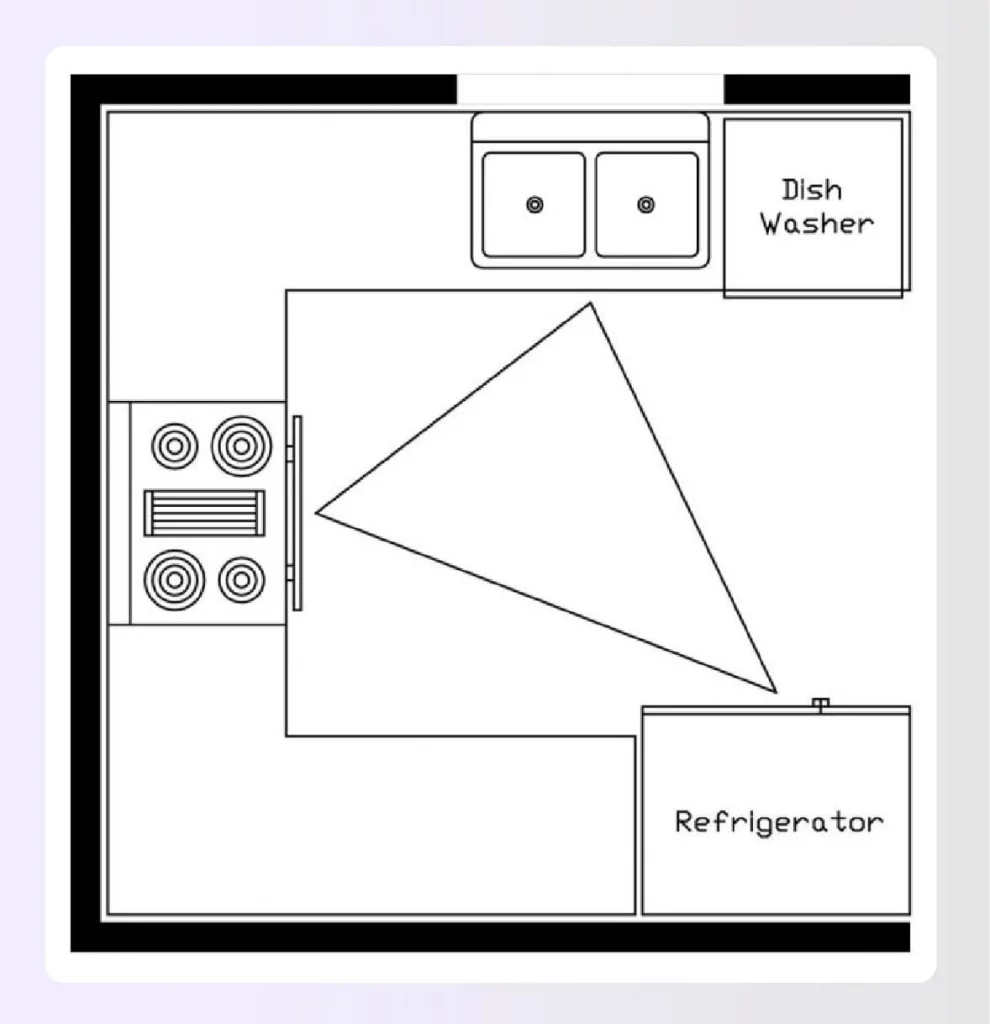
The foundation of any ergonomic kitchen design layout rests on the magic triangle principle, which strategically positions your three primary work zones: refrigerator, sink, and cooking area. This arrangement isn’t arbitrary—it mirrors the natural sequence of cooking activities where you retrieve ingredients, wash and prepare food, then cook your meal. When properly configured, the magic triangle creates efficient movement paths that drastically reduce unnecessary steps and physical strain during meal preparation.
For optimal functionality, each side of the triangle should measure between 1.2 and 2.5 meters, with the total perimeter falling between 3.5 and 6 meters. This range ensures you’re not taking excessive steps between stations while preventing cramped workspace conditions. In smaller kitchens, tighter triangle dimensions actually improve efficiency by minimizing movement distance, while larger kitchens require more careful planning to maintain compact workflow patterns. The key is positioning these zones so you can move seamlessly between them without constant turning or reaching across your body.
Determine Your Perfect Counter Height with the Elbow Method

Forget standard 92-centimeter countertops—your ideal work surface height should be customized to your body proportions using the elbow method. Stand upright with arms hanging naturally at your sides, then bend your forearms to form a 90-degree angle at the elbow. Your work surface should sit approximately 10-15 centimeters below the bottom of your elbows in this position. This personalized measurement accounts for variations in arm length and torso proportions that standard height recommendations ignore.
If you share your kitchen with someone of significantly different height, consider these practical solutions:
– Use extra-high chopping boards to temporarily raise the working surface for shorter users
– Install different height zones for specific tasks (higher for chopping, standard for other activities)
– Position the primary cooking zone at the taller person’s optimal height while accommodating the shorter person with portable solutions
Right vs. Left-Handed Kitchen Layouts for Maximum Efficiency
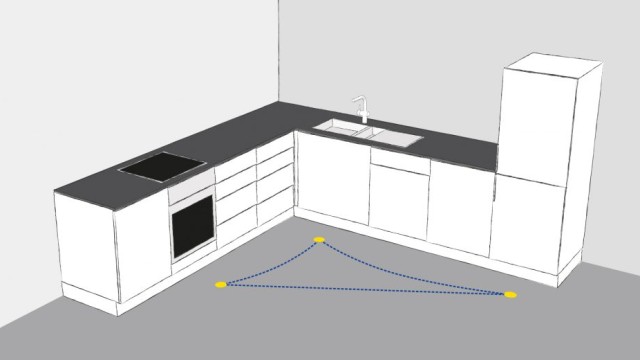
Your dominant hand dramatically impacts how efficiently your kitchen functions. For right-handed cooks, arrange your workspace in a right-to-left progression: store ingredients on the right, position the sink in the center, place the worktop to the left of the sink, and position the hob further left. This configuration allows natural movement patterns without awkward cross-body reaches during food preparation.
Left-handed cooks benefit from the opposite arrangement with worktop positioned to the right of the sink and hob on the far right. In L-shaped or U-shaped layouts, right-handed users should arrange work areas clockwise while left-handed users benefit from an anti-clockwise configuration. Ignoring handedness creates constant friction with natural movement patterns, leading to unnecessary strain and slower meal preparation—a common oversight in many standard kitchen designs.
Optimal Sink, Hob, and Oven Heights for Strain-Free Cooking
Different kitchen tasks require different working heights for maximum comfort. For sink areas, an extra-deep basin installed with a higher base cabinet (approximately 5-10 centimeters above standard counter height) significantly reduces back strain during washing tasks. The deeper bowl allows large pots to sit lower while maintaining comfortable working height, and the elevated front edge prevents water splashes.
Your cooking zone benefits from a slightly lower hob position (2-5 centimeters below standard counter height), which improves visibility into pans without straining your neck. For ovens, modern under-counter installations create unnecessary bending—opt instead for appliances like steam ovens that can be installed at operating height (countertop level). This elevated positioning allows you to easily see what’s on upper racks without bending, dramatically improving accessibility and reducing back strain during frequent oven use.
Critical Handle and Control Design for Daily Kitchen Comfort
Small details like handle design significantly impact your kitchen’s ergonomic performance. Handles should provide sufficient surface area and texture to ensure secure grip even when your hands are greasy or wet from cooking. Modern handleless designs using push-to-open mechanisms or subtle grip recesses maintain clean aesthetics while providing convenient access—plus they eliminate potential catching hazards, especially valuable in homes with children.
Appliance controls also demand ergonomic consideration. Choose interfaces that feel natural to operate, whether traditional knobs or touch controls. BORA cooktop extractor systems, for example, offer multiple control options so you can select what works best for your grip strength and dexterity. Wall cabinets should be mounted at heights allowing comfortable access to lower shelves while maintaining adequate head clearance—typically positioned so the bottom edge sits approximately 50 centimeters above the work surface.
Strategic Window and Island Placement for Enjoyable Cooking
Ergonomic kitchen design extends beyond physical comfort to address psychological factors that affect your cooking experience. Modern cooktop extractor systems that effectively remove fumes allow you to position your hob in front of windows or on cooking islands—locations that would otherwise be impractical. Looking out a window while cooking is significantly more pleasant than staring at a blank wall, transforming cooking from tedious labor into an enjoyable activity.
This spatial consideration becomes especially important in open-plan kitchens where the cooking area is visible from living spaces. A kitchen positioned to offer views of attractive interior spaces or outdoor landscapes creates a more inviting environment that encourages home cooking. Remember that an ergonomic kitchen isn’t just physically comfortable—it should also provide visual pleasure that makes you want to spend time preparing meals.
7 Costly Ergonomic Kitchen Design Errors Homeowners Make
Even with the best intentions, many homeowners create kitchens that cause unnecessary strain. The most common mistakes include:
- Accepting standard worktop heights without verification – This one-size-fits-all approach frequently results in surfaces that are either too high (causing shoulder strain) or too low (requiring uncomfortable bending)
- Ignoring handedness when arranging workspaces – Creating constant friction with natural movement patterns
- Failing to account for different task heights – Using uniform counter height when sinks, hobs, and prep areas benefit from varying elevations
- Positioning frequently used items in hard-to-reach locations – Forcing unnecessary stretching or bending
- Installing wall cabinets too high – Requiring step stools for everyday items
- Poor lighting placement – Creating shadows on work surfaces that cause strain
- Insufficient counter space near appliances – Forcing awkward food transfer movements
Ergonomic Kitchen Design: Expert Answers to Top User Questions
How much does proper ergonomic kitchen design actually improve cooking efficiency?
A well-planned ergonomic kitchen design layout can reduce unnecessary movement by up to 30% during meal preparation. This translates to less physical fatigue, faster cooking times, and significantly reduced risk of repetitive strain injuries that develop from poor kitchen ergonomics over time.
Can I retrofit ergonomic principles into my existing kitchen?
Absolutely. While major renovations provide the most comprehensive solutions, many ergonomic improvements can be implemented in existing kitchens: adding pull-out shelves to deep cabinets, installing under-cabinet lighting, using extra-high chopping boards, or reorganizing storage to follow the work triangle principle. Focus first on the elements causing you the most physical strain during daily use.
How do I determine the best layout for a small kitchen?
In compact spaces, prioritize the work triangle by positioning your refrigerator, sink, and cooking area within easy reach of each other. Galley or L-shaped layouts often work best for small kitchens as they create natural workflow patterns without excessive walking. Consider wall-mounted storage to free up floor space and maintain clear movement pathways between work zones.
Creating your ergonomic kitchen design layout requires moving beyond standard measurements to understand and accommodate your specific needs. By implementing the magic triangle principle, determining your personalized counter height, arranging workspaces for your dominant hand, and optimizing heights for different tasks, you’ll transform cooking from a physically demanding chore into an efficient, enjoyable daily ritual that supports your body rather than straining it. The result isn’t just a kitchen that looks good—it’s one that feels good to use, meal after meal.