Many office workers finish their day with aching legs, numb feet, or nagging lower back pain without realizing their feet are the root cause. When your feet dangle unsupported while seated—common for 68% of desk workers—your entire posture collapses. Your pelvis tilts backward, your spine loses its natural curve, and pressure builds in your lumbar region. An ergonomic footrest isn’t just a comfort accessory; it’s a biomechanical solution that repositions your foundation to prevent these cascading issues. You’ll discover how proper foot support actively redistributes weight, reduces disc compression, and creates the stable base your spine needs to maintain healthy alignment throughout the workday.
Unlike standard footrests, ergonomic models feature scientifically calibrated angles and contours that work with your body’s natural mechanics. The right footrest positions your knees slightly higher than your hips while keeping your feet flat—a critical detail that prevents the “slump-and-sink” effect of conventional seating. This subtle adjustment triggers a chain reaction: your pelvis rotates forward, restoring lumbar support against your chair back, and your shoulders naturally align over your hips. Within minutes of proper use, you’ll feel reduced tension in your hamstrings and calves as blood circulation improves. For those working at standing desks, a footrest provides essential micro-movements that combat fatigue during extended upright sessions. Let’s explore exactly how this small device delivers outsized benefits for your body and focus.
Fixing the “Floating Feet” Problem in Standard Office Chairs
When your feet don’t rest flat on the floor, your body compensates in dangerous ways. Your hamstrings tighten to prevent sliding forward, your pelvis tucks under, and your lower back muscles overwork to maintain upright posture. This “floating feet” scenario increases pressure on spinal discs by up to 40% compared to supported seating. An ergonomic footrest solves this by creating a stable platform that anchors your lower body.
Why 90-Degree Knee Angles Cause Hidden Strain
Most workers believe sitting with knees bent at 90 degrees is ideal, but this ignores critical biomechanics. When feet dangle, that 90-degree bend actually forces your thighs downward, compressing nerves and restricting blood flow. The resulting “dead leg” sensation isn’t just uncomfortable—it signals oxygen deprivation in your muscles. Look for these visual cues that confirm improper support:
– Visible creases in your thigh fabric where chair edge presses
– Foot numbness or tingling after 20+ minutes of sitting
– Constant need to shift position to relieve pressure
Adjusting Footrest Height for True Neutral Posture
Your footrest shouldn’t mimic the floor—it must elevate to correct chair height mismatches. Follow this adjustment sequence:
1. Sit with feet flat on footrest, knees bent at 110 degrees (slightly open)
2. Ensure thighs slope gently downward from hips to knees
3. Confirm no gap exists between calf and chair edge
4. Test by sliding fingers under thigh—if they fit easily, height is correct
A properly adjusted footrest creates a “tripod” base: your sit bones and both feet form three stable contact points. This distributes weight evenly instead of concentrating pressure on your tailbone and thighs.
Boosting Circulation to Prevent Swollen Ankles and Fatigue

Dangling feet act like a tourniquet for your lower body. Gravity pools blood in your feet while compressed veins struggle to return it upward. Within 30 minutes of unsupported sitting, ankle swelling becomes measurable as fluid accumulates. Ergonomic footrests combat this through strategic elevation that leverages your body’s natural pumping mechanism.
Tilted Surfaces Activate Your “Second Heart” Effect
Flat footrests miss a critical opportunity—they don’t engage your calf muscles. Models with a 10-15 degree forward tilt (higher at toes, lower at heel) create micro-movements as you shift weight. This subtle rocking:
– Compresses veins in your calves to propel blood upward
– Reduces venous pressure by 22% compared to flat surfaces
– Prevents fluid buildup that causes end-of-day shoe tightness
Pro Tip: Set a timer to shift foot position every 15 minutes. Alternate between flat-footed and heel-raised positions to maximize circulation benefits.
Recognizing Early Warning Signs of Poor Circulation
Don’t wait for swelling to address this issue. Watch for these subtle indicators during your workday:
– Socks leaving temporary indentations on calves
– Coolness in feet compared to hands
– Visible blue veins on top of feet
– “Pitting edema” (skin holds dimple when pressed)
Left uncorrected, chronic poor circulation contributes to varicose veins and deep vein thrombosis risk. A quality footrest with textured surface provides gentle massage during micro-movements to further boost vascular flow.
Eliminating Lower Back Pain Through Pelvic Realignment
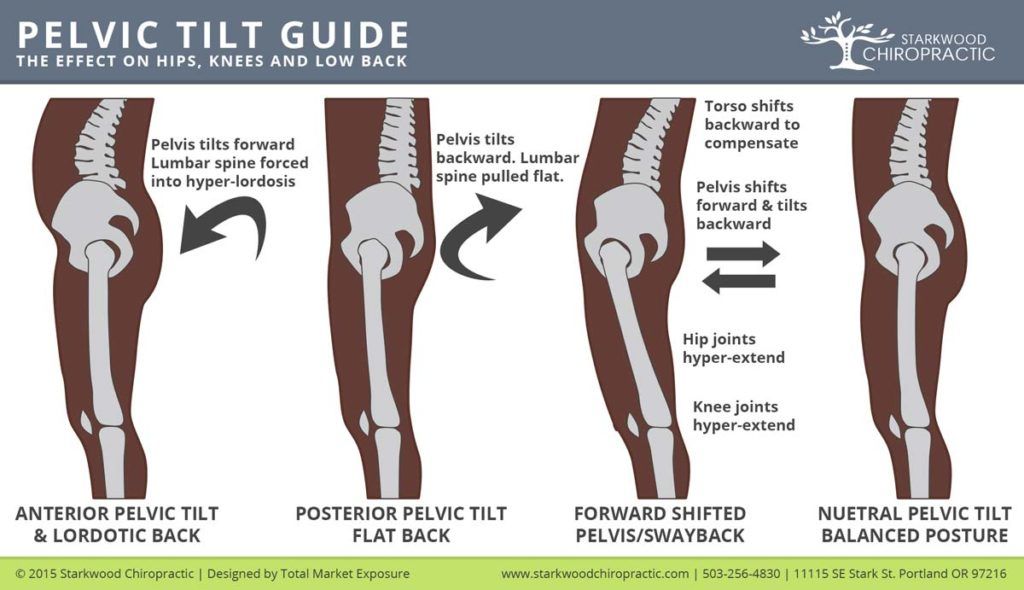
Over 80% of desk-related back pain originates from pelvic misalignment, not spinal issues. When feet dangle, your pelvis rotates backward (posterior tilt), flattening your lumbar curve. This forces discs in your lower spine to bear 30% more load, accelerating wear and tear. An ergonomic footrest counters this by creating the pelvic tilt your spine needs.
How Foot Support Restores Your Natural Spinal Curves
Your lumbar spine requires a 30-45 degree inward curve for optimal disc spacing. Here’s the biomechanical chain reaction when feet gain support:
– Feet flat → Calves perpendicular to floor → Thighs slope downward
– Downward thigh angle → Pelvis rotates forward (anterior tilt)
– Anterior pelvic tilt → Lumbar curve reappears → Disc pressure normalizes
– Restored curve → Back muscles relax → Shoulder alignment corrects
Without this foundation, even the most expensive ergonomic chair fails to deliver proper support. The footrest isn’t auxiliary—it’s the cornerstone of seated posture.
Critical Height Adjustment for Maximum Back Relief
Many users set footrests too low, missing key benefits. For true back pain relief:
– Position footrest so knees sit 2-3 inches above hip level
– Maintain 110-degree knee angle (not 90 degrees)
– Ensure feet rest flat without toe strain
– Test by sitting against chair back—if lumbar support now contacts spine, height is correct
If your lower back still feels unsupported after adjustment, your footrest likely lacks sufficient height range. Models with 4+ inches of vertical adjustment accommodate most body types.
Increasing Focus and Productivity Through Reduced Discomfort
Physical discomfort constantly drains cognitive resources. Every time you shift position or rub aching feet, your brain disengages from work for 8-12 seconds. Over an 8-hour day, this “micro-interruption tax” costs nearly 90 minutes of productive time. Ergonomic footrests combat this by eliminating the physical distractions that fragment attention.
The Cognitive Cost of “Fidget Fatigue”
When your body fights poor posture, your brain pays the price:
– Pain signals compete for neural pathways with work tasks
– Constant micro-adjustments prevent deep focus states
– Energy diverted to muscle tension reduces mental stamina
– End-of-day fatigue sets in 2-3 hours earlier than with proper support
Workers using correctly adjusted footrests report 27% fewer posture-related distractions during critical tasks. The stability they provide creates a physical “anchor” that lets your mind fully engage with work.
Optimizing Footrest Use for Deep Work Sessions
Maximize concentration benefits with these techniques:
– Pre-focus ritual: Adjust footrest height before starting priority work
– Movement breaks: Rock feet gently every 25 minutes to maintain circulation
– Surface texture: Choose models with subtle ridges for passive muscle engagement
– Positioning: Place footrest close enough to avoid forward lean while using
Unlike static solutions, dynamic footrests with rocking bases provide the subtle movement your body craves without distracting from screen work—keeping you in flow state longer.
Choosing the Right Footrest for Your Body and Desk Setup
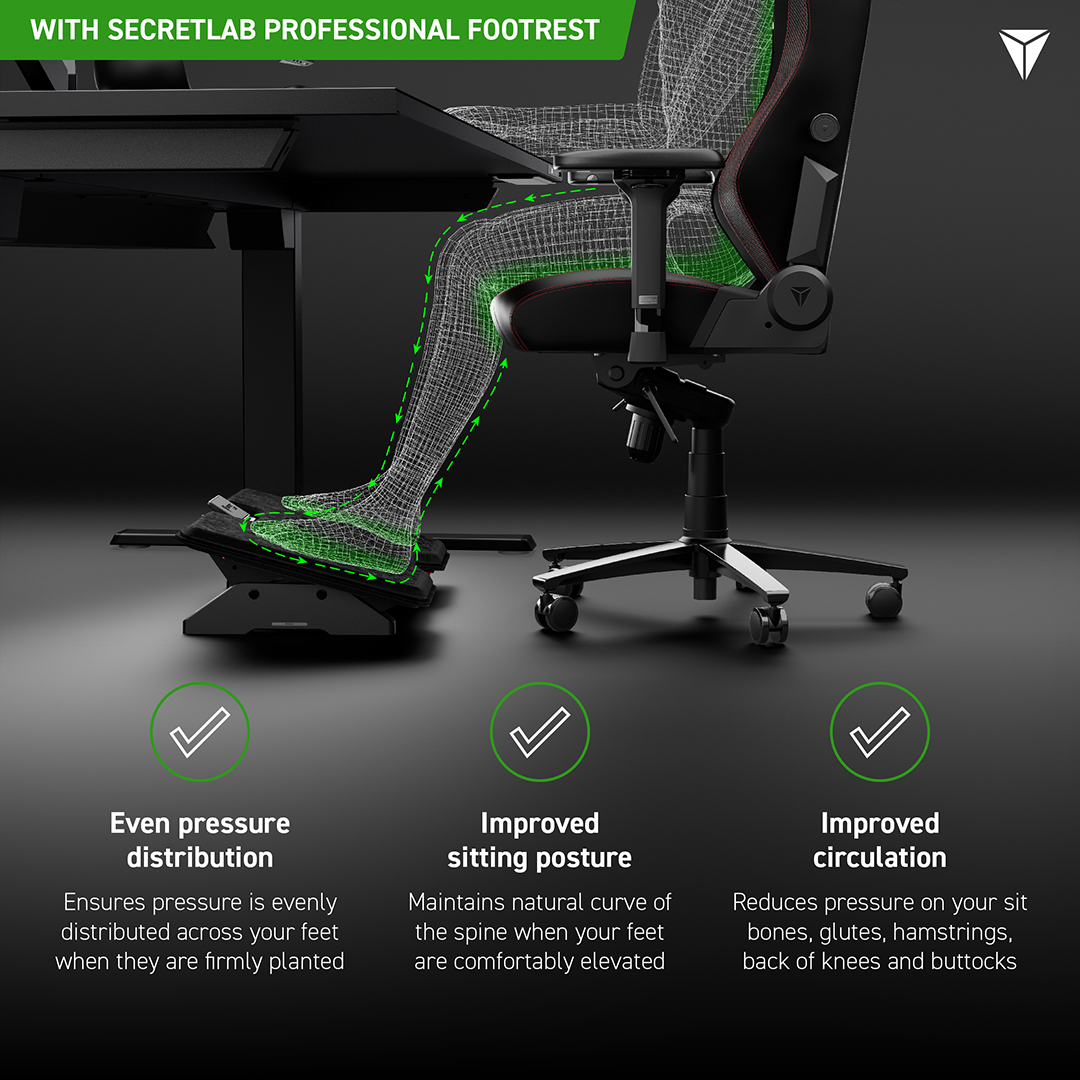
Not all footrests deliver ergonomic benefits. Many flat, cushioned models actually worsen posture by encouraging feet to slide forward. True ergonomic designs prioritize adjustability and biomechanical alignment over comfort alone.
Essential Features That Deliver Real Benefits
| Feature | Standard Footrest | True Ergonomic Footrest |
|---|---|---|
| Surface Angle | Flat | 10-15° forward tilt |
| Height Range | Fixed or minimal | 4+ inches adjustable |
| Base Stability | Slides easily | Non-slip, weighted base |
| Foot Position | Promotes sliding | Secures feet in place |
| Material | Soft cushion | Firm, supportive surface |
Avoid models with excessive padding—they compress under weight, negating height benefits. Firm surfaces maintain consistent elevation while textured tops prevent foot slippage.
Matching Footrests to Your Specific Needs
- For short workers: Prioritize height range (4-6 inches) and compact footprint
- For standing desks: Choose lightweight, portable models with rocking base
- For back pain sufferers: Select adjustable tilt models to fine-tune pelvic position
- For circulation issues: Opt for textured surfaces that stimulate calf muscles
The ideal footrest disappears from your awareness—you shouldn’t “feel” it working because your body is finally in alignment. If you’re constantly adjusting it, the design doesn’t match your biomechanics.
Final Note: Proper foot support transforms sitting from a passive activity into active posture maintenance. By anchoring your foundation correctly, you eliminate the root cause of most desk-related discomfort while unlocking sustained focus. Start with 15-minute test sessions to adjust to the new position—your body may initially feel the unfamiliar engagement of correct muscles. Within 3-5 days, the subtle shift to neutral alignment will become your new normal, replacing end-of-day aches with consistent energy. For lasting benefits, pair your footrest with hourly micro-movements: lift heels while keeping toes down, then reverse, creating a gentle pump that sustains circulation throughout your workday. Your spine, productivity, and long-term health will thank you for this foundational upgrade.