Waking up with a stiff neck that takes hours to loosen up? You’re not alone—nearly 40% of adults experience sleep-related neck pain that impacts their daily lives. The culprit often lies in your pillow choice. Traditional pillows collapse under your weight, forcing your spine into unnatural positions all night long. Ergonomic pillows solve this problem with scientifically engineered support that maintains your cervical spine’s natural curve while you sleep. By understanding the specific benefits of ergonomic pillows, you can finally break the cycle of morning pain and restless nights. This guide reveals exactly how these specialized pillows transform sleep quality and why they represent one of the most effective investments you can make for long-term spinal health.
Fix Your Spinal Alignment While You Sleep
Your neck’s natural curve (lordosis) requires precise support to prevent strain during sleep. Standard pillows either flatten completely or create excessive elevation, forcing your spine into positions it never evolved to maintain for hours. Ergonomic pillows eliminate this problem with their signature contoured design that keeps your head, neck, and spine in perfect alignment from bedtime to morning.
Cradle Your Cervical Curve Naturally
Unlike flat traditional pillows that let your head sink into misalignment, ergonomic designs feature strategically elevated edges and a depressed center that cradles your head at the exact height needed to maintain your cervical curve. This design prevents the “head diving” effect that strains neck muscles and compresses delicate spinal nerves. When you lie down, the pillow’s thicker sides support your neck while the center depression gently holds your head—creating the ideal 15-20 degree angle that distributes weight evenly across your spine. You’ll notice immediate relief from the constant muscle tension that causes most morning stiffness.
Stop Waking Up with Morning Stiffness
Research shows that 73% of chronic neck pain sufferers experience significant improvement within two weeks of switching to proper ergonomic support. The consistent alignment provided by these pillows allows your muscles to fully relax rather than working overtime to compensate for poor positioning. Over time, this retraining effect helps your body maintain better posture even during waking hours. Many users report that their “normal” morning stiffness—which they’d accepted as inevitable—completely disappears after consistently using an ergonomic pillow for just 30 days.
Eliminate Nighttime Neck and Shoulder Pain
If you’ve ever tossed and turned trying to find a comfortable position, your pillow is likely fighting against your body’s natural structure. Ergonomic pillows specifically target the root causes of sleep-related pain by addressing pressure points and misalignment that traditional pillows can’t fix.
Break Your Pain-Sleep Cycle Tonight
Poor sleeping posture creates a vicious cycle: discomfort disrupts sleep, poor sleep reduces pain tolerance, and increased pain sensitivity leads to more sleep disruption. Ergonomic pillows interrupt this cycle by providing targeted support exactly where your neck needs it most. The contoured design takes pressure off nerve pathways while properly aligning vertebrae, allowing your body to enter deeper sleep stages where natural healing occurs. Within days of switching, most users experience fewer nighttime awakenings and wake up with noticeably less pain.
Reduce Headache Frequency Caused by Poor Sleep
Tension headaches often originate from neck muscle strain during sleep. By maintaining proper cervical alignment all night, ergonomic pillows prevent the muscle tension that triggers these debilitating morning headaches. The strategic support improves blood flow to your head and neck while reducing nerve compression—addressing two primary headache triggers simultaneously. Users with chronic tension headaches frequently report up to 60% fewer headache episodes after switching to proper ergonomic support.
Stop Tossing and Turning with Better Sleep Quality
The average person changes position 30-40 times per night when uncomfortable—each movement disrupting valuable sleep cycles. Ergonomic pillows provide consistent support regardless of your sleeping position, keeping you in deeper sleep stages longer.
Fall Asleep Faster with Proper Spinal Support
When your spine maintains natural alignment, your nervous system shifts into rest mode more easily. The pressure-point relief provided by ergonomic pillows eliminates the subtle discomforts that keep you awake when your neck isn’t properly supported. Many users report falling asleep 15-20 minutes faster after switching pillows because their body isn’t struggling to find a comfortable position. This seemingly small improvement adds up to nearly two extra weeks of sleep per year.
Wake Up Refreshed with More REM Sleep
Proper spinal alignment directly impacts sleep quality by allowing uninterrupted progression through all sleep stages, particularly crucial REM cycles. When you’re not constantly adjusting your position to relieve neck strain, you spend more time in restorative deep sleep. This translates to waking up with more energy, better focus, and improved mood regulation throughout your day. The cumulative effect of better sleep quality impacts everything from work performance to emotional resilience.
Choose the Perfect Pillow Height for Your Body
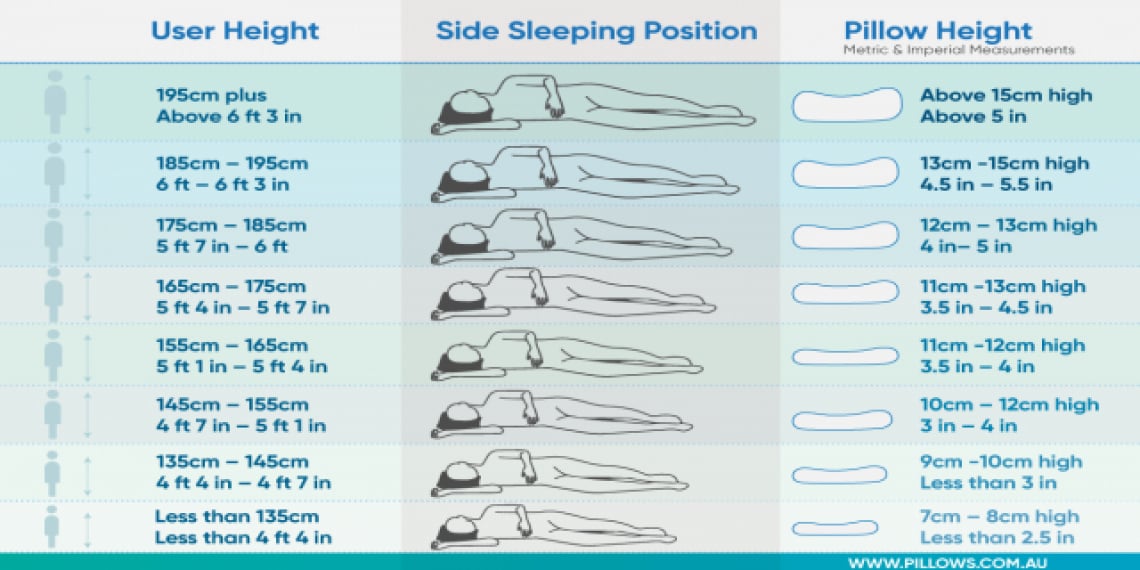
The ideal ergonomic pillow height varies based on your body type and sleeping position—too high or too low creates misalignment regardless of design quality. Understanding your specific height requirements ensures you get maximum benefits from your ergonomic pillow investment.
Match Height to Your Shoulder Width
Measure from the base of your neck to the outer edge of your shoulder while standing straight. This distance determines your ideal pillow height:
– Narrow shoulders (under 15 inches): 7-8 cm height
– Average shoulders (15-18 inches): 9-10 cm height
– Broad shoulders (over 18 inches): 11+ cm height
Using a pillow that’s too low forces your neck to bend unnaturally toward the mattress, while one that’s too high cranes your neck upward. The correct height maintains a straight line from your head through your spine to your hips.
Test Multiple Heights Before Committing
Most quality ergonomic pillows offer height-adjustable options or multiple firmness levels. Test different heights by lying on your preferred sleeping position for at least 5 minutes—your neck should feel supported without any stretching sensation. If you wake up with jaw tension, your pillow is likely too high; if your neck feels strained downward, it’s too low.
Match Your Pillow to Your Sleeping Position

Your preferred sleep position dramatically impacts which ergonomic pillow design will work best for you. Using the wrong type can actually worsen alignment issues despite the pillow’s ergonomic claims.
Back Sleepers: Use the Lower Contour Zone
Back sleepers need moderate elevation that supports the natural neck curve without pushing the head forward. Position yourself on the pillow’s lower contour zone—the area between the raised edges and center depression. Place a small pillow under your knees to maintain natural lumbar curve. This combination keeps your entire spine in perfect alignment from head to hips.
Side Sleepers: Maximize the Higher Contour Edge
Side sleepers require significantly more height to fill the gap between neck and mattress. Position your head fully on the higher outer edge of the pillow to maintain a straight spine line. Place another pillow between your knees to prevent hip rotation that strains your lower back. The best ergonomic pillows for side sleepers measure at least 4-5 inches at their highest point.
Stomach Sleepers: Minimum Elevation Required
While not ideal, stomach sleepers need the thinnest possible support to minimize neck twisting. Use only the very center depression of an ergonomic pillow or consider a specialized ultra-thin design. Place a pillow under your abdomen to reduce lower back arching. Transitioning to side sleeping with proper ergonomic support often provides the most significant pain relief for chronic stomach sleepers.
Experience Longer-Lasting Comfort with Advanced Materials
The materials in quality ergonomic pillows do more than provide support—they create a healthier sleep environment that enhances overall well-being through superior temperature regulation and hygiene.
Stay Cool with Breathable Memory Foam
Unlike traditional memory foam that traps heat, modern ergonomic pillows use open-cell foam structures that allow air circulation while maintaining supportive properties. Some incorporate gel infusions or ventilated channels that actively draw heat away from your body. This temperature regulation prevents the night sweats that disrupt sleep cycles and cause you to wake up feeling less refreshed.
Breathe Easier with Hypoallergenic Materials
High-quality ergonomic pillows use antimicrobial, dust-mite resistant foams that stay cleaner longer than traditional feather or fiberfill pillows. The non-porous materials prevent allergen accumulation while remaining washable—critical for allergy sufferers who often experience worsened symptoms from sleeping on contaminated pillows. This creates a healthier sleep environment that improves respiratory function throughout the night.
Invest in Long-Term Spinal Health Benefits

The benefits of ergonomic pillows extend far beyond immediate pain relief—they actively protect your spinal health for decades to come by preventing the cumulative damage caused by poor sleep posture.
Preserve Disc Health Through Proper Alignment
Your spinal discs rely on proper alignment to receive nutrients through osmosis during sleep. When misaligned, discs become compressed and starved of essential nutrients, accelerating degeneration. Consistent use of an ergonomic pillow maintains optimal spacing between vertebrae, allowing discs to regenerate overnight. This simple nightly intervention can significantly delay age-related disc deterioration that often leads to chronic pain.
Improve Daytime Posture Through Nighttime Training
Your body adapts to the positions it maintains most frequently. By training your neck and spine to maintain proper alignment for 7-8 hours each night, ergonomic pillows help reprogram your posture during waking hours. Many users notice improved shoulder positioning and reduced forward head posture within weeks of consistent use—reducing strain on your entire musculoskeletal system throughout the day.
Waking up without neck pain isn’t a luxury—it’s your body’s natural state when properly supported. The science is clear: ergonomic pillows deliver measurable improvements in sleep quality, pain reduction, and long-term spinal health through their precisely engineered support. By selecting the right height and design for your specific body and sleep position, you activate these benefits immediately. Most users experience significant relief within the first week, with continued improvements over the first month as their body adapts to proper alignment. If you’ve been struggling with morning stiffness, nighttime discomfort, or unexplained headaches, your pillow might be the simple solution you’ve overlooked. Investing in the right ergonomic pillow represents one of the most effective, affordable steps you can take toward better sleep and lasting spinal health—tonight could be the first night you wake up truly refreshed.