Ergonomic injuries develop when the body is pushed beyond its natural limits through repeated stress, poor posture, and workplace conditions that fail to accommodate human physiology. These injuries affect the muscles, tendons, nerves, and joints, causing pain that can progress from mild discomfort to debilitating conditions requiring months of treatment and recovery. Understanding the cause of ergonomic injury is essential for both employers seeking to protect their workforce and individuals who want to prevent chronic pain before it begins. Research indicates that approximately one-third of all workplace injuries stem from ergonomic factors, translating to roughly $20 billion in direct costs annually for American employers alone.
The term “ergonomic injury” encompasses a range of conditions often called musculoskeletal disorders, cumulative trauma disorders, or repetitive strain injuries depending on the context and regulatory framework. OSHA and NIOSH prefer the terminology “musculoskeletal disorders” (MSDs), which captures injuries affecting muscles, nerves, blood vessels, ligaments, and tendons throughout the body. These injuries may appear suddenly following a single incident, but most develop gradually through prolonged exposure to risk factors that accumulate over weeks, months, or even years of work. By the time pain becomes severe enough to seek medical attention, the underlying damage has often been building silently for quite some time.
This guide examines the primary causes of ergonomic injuries across different workplace settings, explores the specific conditions that result from these risk factors, and provides actionable strategies for prevention. Whether you work in an office, a healthcare facility, a manufacturing plant, or from home, understanding what causes ergonomic injury empowers you to make changes that protect your long-term musculoskeletal health.
Primary Physical Risk Factors

Ergonomic injuries result from exposure to physical risk factors that place unbalanced strain on the body over time. These factors rarely exist in isolation—most workplace injuries involve a combination of multiple risk elements that compound each other’s effects. Recognizing these primary risk factors is the first step toward creating safer work environments and healthier habits.
Forceful Exertions and Heavy Lifting
Tasks requiring significant physical effort create substantial stress on muscles, tendons, and joints throughout the body. Forceful exertions include lifting heavy items, pushing and pulling heavy loads, performing physically demanding activities, and any work that demands more force than the body can comfortably generate. When workers repeatedly perform these tasks without adequate recovery time, micro-tears in muscle fibers and connective tissues accumulate faster than the body can repair them. Manufacturing workers handling heavy materials, construction crews maneuvering equipment, and healthcare providers lifting patients all face elevated risk from forceful exertions. The back, shoulders, and hands are particularly vulnerable to injury from these activities, especially when combined with awkward body positioning or inadequate equipment assistance.
Repetitive Motions and Tasks
Performing the same or similar tasks repetitively without adequate recovery time ranks among the most significant contributors to ergonomic injury causes. Repetitive motions cause cumulative damage to muscles, tendons, and nerves gradually, making them particularly insidious because the warning signs may feel mild or unremarkable until significant damage has occurred. Office workers typing for hours, assembly line personnel performing identical hand movements, and data entry specialists using mice repeatedly all expose themselves to this risk factor. The hands, wrists, forearms, and neck bear the brunt of repetitive strain injuries, with conditions like carpal tunnel syndrome developing when the tendons in the wrist become inflamed from overuse and compress the median nerve. Studies suggest that roughly 64% of computer users experience symptoms of repetitive strain injury at some point during their careers, highlighting just how common this ergonomic hazard has become in modern workplaces.
Awkward Postures and Body Positioning
Working in awkward body postures significantly increases injury risk by placing abnormal stress on joints and soft tissues that are not designed to bear load in these positions. Awkward postures include bending at the waist, reaching overhead, twisting the spine, kneeling, squatting, and maintaining static positions for extended periods. These positions strain the musculoskeletal system because they force joints beyond their natural range of motion and require muscles to work harder to maintain position. Healthcare workers bending over patients, laboratory technicians leaning over microscopes, and maintenance workers reaching into confined spaces all expose themselves to posture-related ergonomic injury causes. The lower back, neck, shoulders, and knees are particularly vulnerable to damage from awkward positioning, with many workers developing chronic pain conditions that persist long after they leave the job.
Vibration and Contact Stress
Using vibrating tools and equipment exposes workers to vibration-related ergonomic risks that can cause nerve damage and circulatory problems in addition to musculoskeletal issues. Construction workers operating jackhammers, manufacturing personnel using power sanders, and maintenance workers handling vibrating equipment all face this hazard regularly. Prolonged vibration exposure damages the small blood vessels and nerves in the hands and arms, leading to conditions like hand-arm vibration syndrome that causes numbness, tingling, and loss of grip strength. Contact stress occurs when body parts press against hard surfaces or edges, creating localized pressure that damages soft tissues and nerves. Leaning on sharp table edges, gripping tools that press against the palms, and resting wrists against hard keyboard edges all create contact stress that contributes to ergonomic injury development over time.
Workplace Environmental Causes
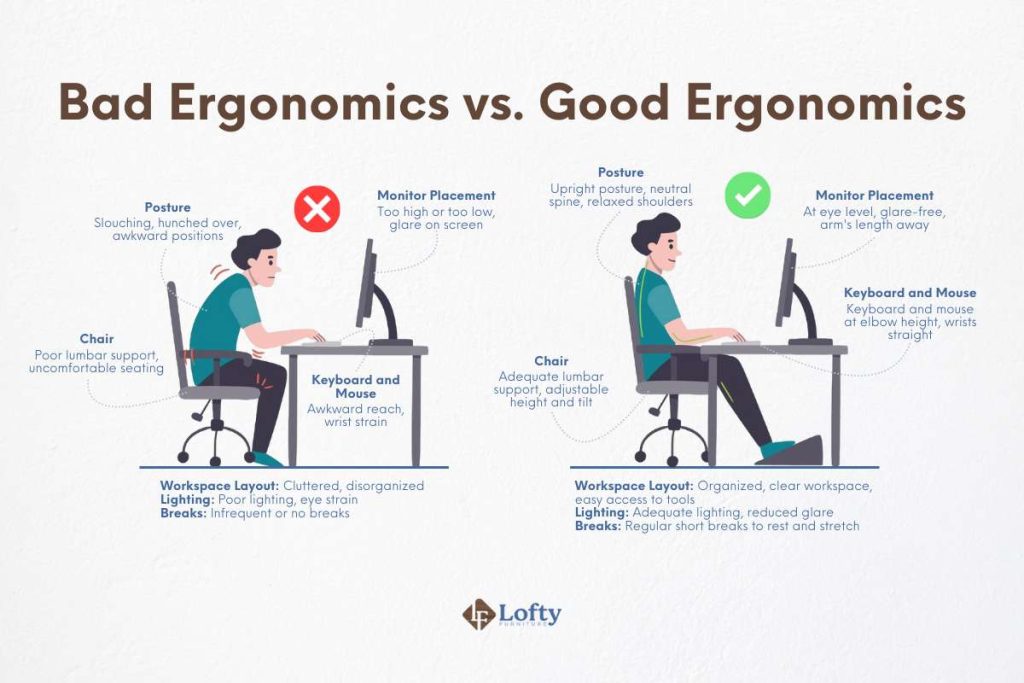
Beyond individual physical risk factors, workplace conditions and organizational practices create environmental contexts that either increase or decrease ergonomic injury risk. These systemic factors often determine whether individual workers develop serious conditions or remain healthy throughout their careers.
Poor Workspace Design
Workspaces that are not properly designed to accommodate human body mechanics create chronic ergonomic hazards that affect workers day after day. Improperly adjusted workstations force employees into awkward postures to complete their tasks, while inappropriate chair or desk heights create sustained strain on the back, shoulders, and wrists. Monitor positions that require awkward neck postures, equipment spacing that demands excessive reaching, and workstation layouts that lack sufficient leg room all contribute to cumulative damage over time. Office workers frequently suffer from improvised workspace setups that lack proper equipment, while even well-designed offices may have chairs and desks that cannot accommodate all body types equally. The cause of ergonomic injury in many offices traces directly to workstation design failures that force workers into positions their bodies cannot sustain comfortably for eight hours daily.
Inadequate Recovery Time
The body requires rest to recover from physical strain, and when stress is consistently placed on muscles and joints without sufficient recovery time, ergonomic injuries accumulate progressively. High-production environments where break times are limited or workloads are excessive prevent workers from giving their bodies the recovery period needed to repair micro-damage from daily tasks. When recovery time is inadequate, yesterday’s strain combines with today’s strain to create a cumulative burden that eventually overwhelms the body’s repair capacity. This is why overtime, compressed schedules, and understaffing all increase ergonomic injury risk—they reduce the available recovery time between exposure periods. Organizations that fail to build adequate break time into work schedules are essentially creating conditions that guarantee eventual injury for their workers.
Static Postures and Sedentary Work
Maintaining the same position for extended periods, whether sitting or standing, restricts blood flow, causes muscle fatigue, and leads to tissue stress that accumulates into injury over time. Office workers who sit for long periods without movement experience progressive stiffness in the hips and lower back, while the shoulders and wrists grow fatigued from maintaining static positions during keyboard and mouse use. Workers who must hold static positions during their tasks—whether standing at a checkout counter or holding a tool in a fixed grip—face similar risks from sustained muscle contraction without variation. The lack of movement prevents fresh blood from delivering oxygen and nutrients to working tissues while failing to remove metabolic waste products, creating an environment where tissue damage accumulates faster than it can be repaired. This is why job designs that require prolonged static postures are significant ergonomic injury causes regardless of whether the work involves heavy physical effort.
Common Types of Ergonomic Injuries
Understanding the specific conditions that result from ergonomic risk factors helps workers and employers recognize problems early and take appropriate action before minor issues become disabling injuries. Each type of ergonomic injury has characteristic causes and warning signs that enable identification and intervention.
Carpal Tunnel Syndrome
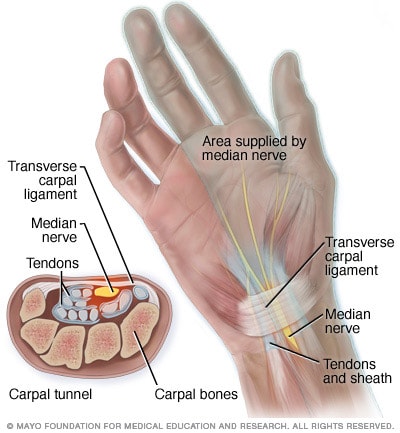
Carpal tunnel syndrome represents one of the most well-known ergonomic injuries, affecting the wrist and hand through compression of the median nerve as it passes through the carpal tunnel in the wrist. This condition develops when the muscles and tendons in the wrist become inflamed from overuse and poor mechanics, causing swelling that puts pressure on the median nerve. The result is pain, numbness, and weakness in the hand that can progress to include difficulty gripping objects and performing fine motor tasks. Research indicates that approximately 3% of women and 2% of men suffer from carpal tunnel syndrome, with women generally more susceptible than men due to naturally smaller carpal tunnels. The condition causes significant workplace disruption, with almost half of those diagnosed changing jobs within the first 30 months and an average of 27 sick days taken to manage the condition. OSHA estimates that the average cost of a single carpal tunnel claim exceeds $28,000 in direct costs, making prevention economically important as well as medically necessary.
Lower Back Pain
Lower back pain stands as the most common and expensive type of ergonomic injury, affecting approximately 80% of adults at some point during their lives. In occupational settings, lower back pain can progress from a minor nuisance to a major injury without warning, often leaving workers unable to perform their job duties for extended periods. The condition results from excessive exertion, poor body mechanics, fatigue, and equipment that doesn’t fit the worker’s body, with poor posture and improper lifting techniques combining to stress the structures of the lower back. Cheap office chairs that keep posture static increase stress in the back, shoulders, arms, and legs, while manual handling tasks place sudden heavy loads on the spine. Estimates place the average cost of a single claim involving lower back pain or serious lower back injury between $40,000 and $80,000 in direct costs, making back injuries among the most expensive ergonomic conditions for employers to address.
Tendinitis and Tendon Disorders
Tendinitis refers to irritation or inflammation of tendons, the thick fibrous tissues connecting muscle to bone throughout the body. This condition results from repetitive or prolonged activities, forceful exertion, awkward and static postures, vibration, and localized mechanical stress that causes tendon fibers to tear and trigger an inflammatory response. Over time, inflamed tendons become thickened, bumpy, and irregular, and without rest and time for tissue healing, permanent weakening can occur. Due to the misleading implication that inflammation is always present, clinical settings prefer terms like “tendinopathy” or “tendinosis” to describe chronic tendon pain conditions. Tendinitis is most common among employees whose jobs require significant physical exertion and is particularly prevalent in individuals over age 40 due to reduced tissue elasticity. OSHA data indicates that claims related to tendinitis can cost employers more than $30,000 per claim, with conditions like tennis elbow potentially requiring treatment costs exceeding $80,000 in severe cases.