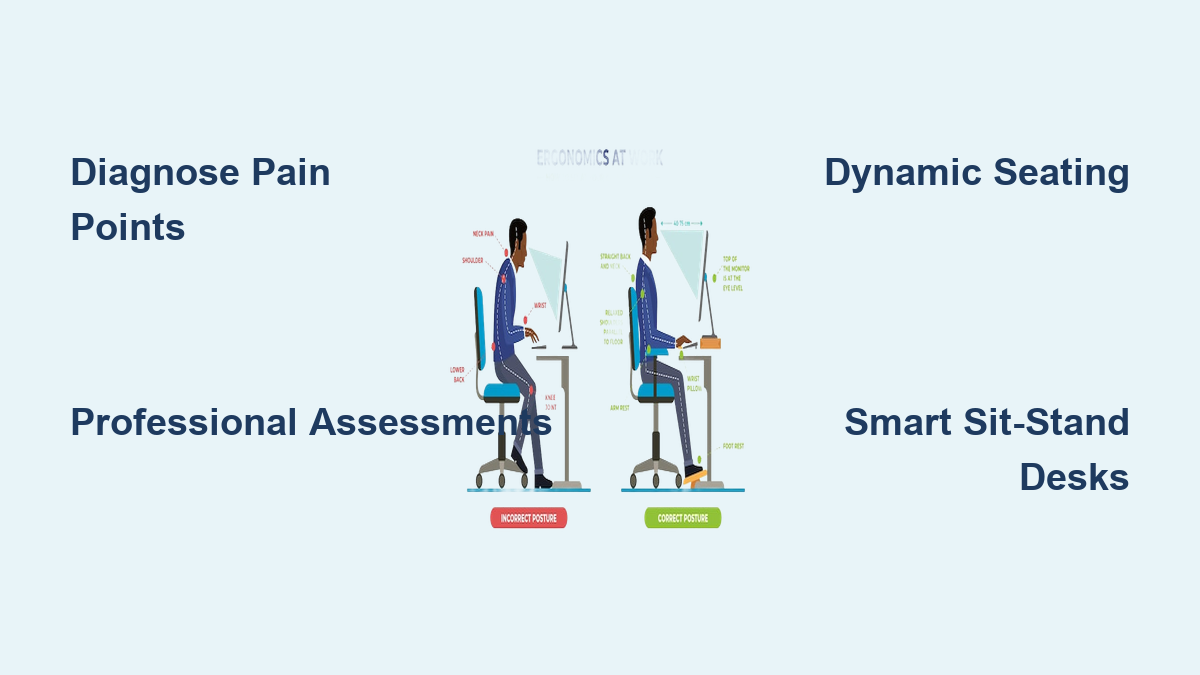
Your employees’ physical comfort directly impacts your bottom line, yet most organizations still treat ergonomics as mere chair adjustments rather than strategic business investments. Modern advanced ergonomic concepts go far beyond basic workstation tweaks—they represent integrated systems that enhance productivity while preventing costly injuries. Research shows companies implementing sophisticated ergonomic solutions see up to 25% reductions in musculoskeletal disorders and 17% productivity gains from reduced discomfort-related interruptions. As hybrid work models expand, understanding these nuanced approaches has become essential for creating workspaces where employees thrive both physically and professionally. This guide reveals the sophisticated strategies forward-thinking organizations use to transform their work environments through evidence-based ergonomic principles.
The financial case for ergonomic excellence continues strengthening as organizations document clear returns through reduced injury claims, lower healthcare costs, and improved talent retention. Beyond these quantifiable benefits, workplaces embracing advanced ergonomic concepts position themselves as employers of choice in competitive labor markets. Understanding these sophisticated approaches enables you to make informed investments that deliver meaningful returns while creating environments where your team can perform at their absolute best.
Diagnose Your Specific Ergonomic Pain Points
Stop guessing which ergonomic interventions will deliver maximum impact—systematically identify your workplace’s unique pressure points through targeted assessment protocols. Begin by documenting existing equipment age, condition, and adjustability capabilities across your organization; this baseline reveals quick-win opportunities where minor modifications resolve significant issues without major capital expenditure. For example, adding monitor risers to elevate screens to eye level often eliminates neck strain for under $50 per workstation, delivering immediate comfort improvements.
Employee-specific assessments prove equally critical, as ergonomic needs vary dramatically based on body dimensions, job functions, and existing health conditions. Implement structured questionnaires gathering data on current discomfort patterns, task requirements, and equipment satisfaction levels to prioritize interventions addressing the most pressing issues first. This dual approach—organizational inventory plus individual evaluation—ensures your ergonomic strategy targets actual problems rather than assumed needs.
Prioritize recommendations based on impact-to-investment ratio, starting with low-cost, high-impact solutions before progressing to comprehensive equipment replacements. Simple interventions like footrests, keyboard trays, and document holders often provide substantial improvements while building momentum for more significant investments. This phased approach demonstrates immediate value to stakeholders while establishing the foundation for long-term ergonomic excellence.
Professional Ergonomic Assessments That Deliver Actionable Insights
Expert ergonomic assessments have evolved beyond basic posture checks to comprehensive analyses identifying hidden risk factors through systematic observation of work patterns and equipment interactions. Certified consultants now measure precise parameters like reach distances, viewing angles, and force requirements that contribute to strain over time, creating customized intervention roadmaps rather than generic recommendations. These professionals watch employees perform actual job tasks to identify micro-movements causing cumulative stress that standard assessments might miss.
Remote ergonomic reviews have become game-changers for distributed workforces, using video technology and digital measurement tools to assess home offices with surprising accuracy. These virtual consultations eliminate geographical barriers while reducing service delivery costs by up to 60% compared to traditional on-site visits. Employees simply share their screen during a video call while consultants guide them through specific positioning tests and measurements, delivering detailed adjustment recommendations within 24 hours.
The most valuable assessments culminate in prioritized action plans specifying:
– Immediate adjustments achievable through simple modifications
– Medium-term solutions requiring accessory purchases
– Long-term equipment replacements with ROI projections
– Behavioral changes to complement physical interventions
These comprehensive reports transform ergonomic improvements from isolated fixes into strategic initiatives with measurable business outcomes.
Premium Seating Solutions That Adapt to Human Movement
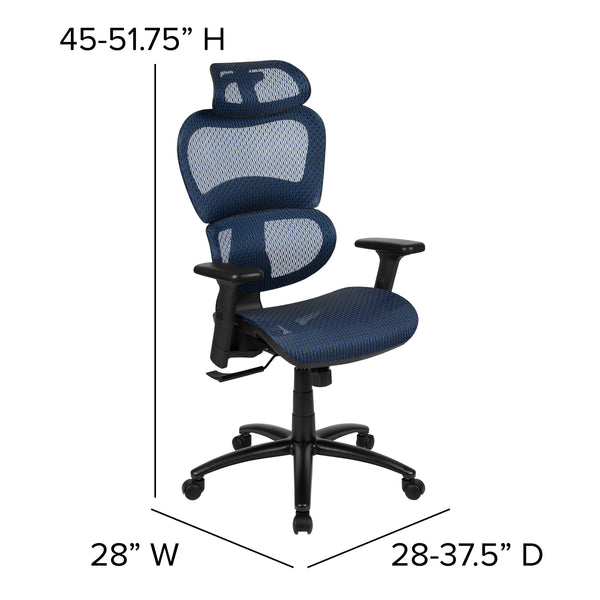
Modern ergonomic chairs have evolved from static furniture to dynamic support systems that respond intelligently to natural movement throughout the workday. High-end models feature synchronized tilt mechanisms maintaining proper spinal alignment during reclining, forward leaning, and lateral shifts—critical for knowledge workers who naturally change positions while thinking or collaborating. Mesh backrests now incorporate variable tension zones providing targeted lumbar support that automatically adjusts to individual spinal curves without manual intervention.
When evaluating seating options, prioritize these non-negotiable adjustability features:
– Seat depth adjustment accommodating different thigh lengths (prevents pressure behind knees)
– Independent lumbar height and depth controls matching individual spinal anatomy
– 3D armrests adjusting vertically, horizontally, and rotationally for optimal shoulder positioning
– Seat height range covering 15-22 inches to support diverse body types
Construction quality directly impacts long-term value—premium chairs with robust gas lifts, durable casters, and replaceable components typically deliver 10+ years of service compared to 3-5 years for budget alternatives. This extended lifecycle often justifies higher initial investments through substantially lower total cost of ownership.
Maximize Sit-Stand Desk Benefits With Smart Implementation
Sit-stand desks deliver measurable health benefits only when implemented with proper usage protocols—not merely purchased and installed. The most effective organizations establish clear position-change guidelines recommending transitions every 30-60 minutes based on individual comfort levels rather than arbitrary timers. Advanced models with programmable height memories significantly increase compliance by allowing one-touch transitions between pre-set seated and standing positions, eliminating the friction of manual adjustments.
Anti-collision sensors represent a critical but often overlooked feature, especially in dense office environments where desks sit close together. These systems detect obstacles during height adjustments, preventing costly damage to equipment and potential injuries to nearby colleagues. For budget-conscious implementations, conversion platforms transforming existing desks into sit-stand workstations offer 60-70% cost savings compared to full desk replacements while delivering similar functionality.
Track usage patterns to identify non-compliance issues—many advanced desks now integrate with workplace analytics platforms showing position-change frequency across departments. This data helps target additional training where needed and demonstrates program effectiveness to stakeholders through measurable behavior change.
Targeted Input Device Strategies for Common Injury Prevention

Generic “ergonomic” keyboards and mice often fail because they don’t address specific task requirements—successful implementations match devices to actual work patterns. For heavy typists, split-keyboard designs with adjustable tenting angles reduce ulnar deviation by up to 30 degrees compared to standard layouts, significantly lowering carpal tunnel risk. Low-force key switches requiring only 35-45 grams of actuation force prevent finger fatigue during extended typing sessions.
Vertical mice deliver the most significant benefits for users performing extensive pointing tasks, maintaining a neutral handshake position that reduces forearm supination by 50-70% compared to traditional mice. Trackball alternatives eliminate repetitive wrist movements entirely for precision tasks like graphic design or data analysis. Implement a device trial program allowing employees to test options before final selection—this simple step reduces mismatched equipment by 75% according to industry case studies.
Calculate Your True Ergonomic ROI Beyond Injury Reduction
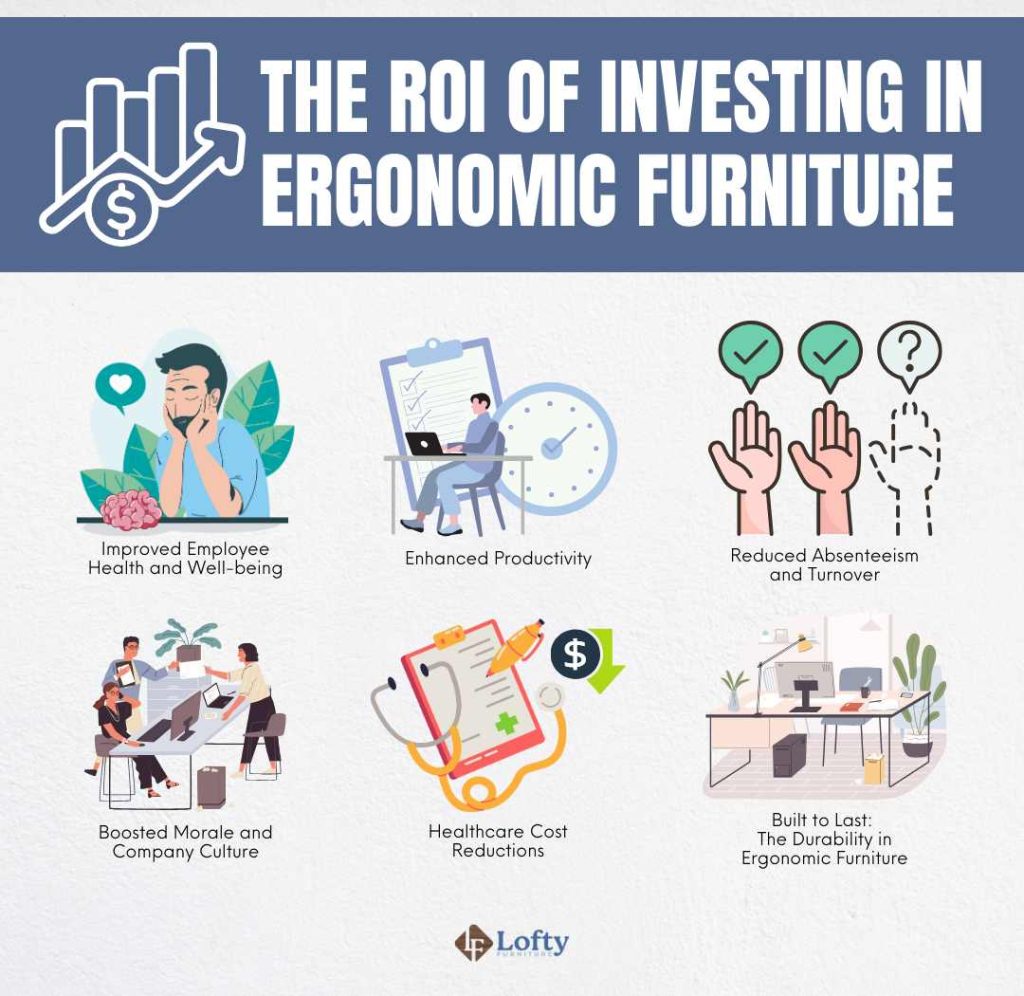
Most organizations underestimate ergonomic returns by focusing solely on reduced workers’ compensation claims. Comprehensive ROI calculations should include:
– Direct savings: Reduced injury claims (typically 20-30% reduction)
– Productivity gains: 10-17% output increases from reduced discomfort interruptions
– Retention value: Lower turnover costs (replacing employees costs 50-200% of annual salary)
– Recruitment advantage: Enhanced employer branding attracting 25% more qualified candidates
Equipment evaluation must consider total cost of ownership rather than purchase price alone. Premium chairs with 10-year lifespans often cost 30% less annually than budget models needing replacement every 3-4 years. Factor in warranty coverage, parts availability, and maintenance requirements when comparing options—these hidden costs frequently exceed initial price differences over time.
Future-Proof Your Ergonomic Strategy With Emerging Technologies
Smart ergonomic solutions incorporating sensors and AI will soon move beyond novelty to business necessity. Chairs with embedded posture monitoring provide real-time feedback through mobile apps, while sit-stand desks track position-change compliance and suggest optimal schedules based on individual usage patterns. These technologies transform ergonomic programs from periodic interventions to continuous improvement systems.
The rise of hybrid work demands portable ergonomic solutions that maintain standards across environments. Invest in foldable laptop stands, compact footrests, and universal monitor mounts enabling consistent setups whether employees work from home, office, or coffee shop. Training programs teaching self-assessment techniques ensure ergonomic principles transfer across locations regardless of available equipment.
Implement These Advanced Ergonomic Concepts for Immediate Impact
Transform your workplace by implementing these advanced ergonomic concepts through a systematic process: begin with targeted assessments identifying your specific pain points, prioritize high-impact interventions based on ROI potential, select equipment matching actual work patterns rather than generic standards, and establish ongoing support systems ensuring sustained benefits. Organizations that treat ergonomics as strategic business function rather than compliance obligation consistently achieve superior returns through healthier, more productive workforces. Start with one department as a pilot, document your results, and scale what works—this evidence-based approach builds organizational buy-in while delivering measurable improvements to both employee wellbeing and business performance.
Leave a Reply