Backpacks have become indispensable companions for students navigating campus corridors, professionals commuting to offices, travelers exploring new destinations, and outdoor enthusiasts tackling challenging trails. Yet despite their widespread use, poorly designed backpacks and improper carrying habits remain leading causes of back pain, shoulder strain, and chronic musculoskeletal discomfort affecting millions of people worldwide. The solution does not require abandoning backpack use altogether—instead, understanding the principles of backpack ergonomics design empowers consumers to select equipment that supports rather than compromises their physical wellbeing. This comprehensive guide explores the essential features that distinguish ergonomic backpacks from conventional designs, proper techniques for wearing and loading packs, and practical strategies for preventing backpack-related discomfort regardless of how you use your bag.
The science of ergonomics focuses on creating tools and environments that align with human anatomy, maximizing comfort while minimizing strain and injury risk. When applied to backpack design, ergonomic principles transform a simple carrying device into a sophisticated system that distributes weight efficiently across the body. A well-designed ergonomic backpack accounts for the natural curves of the spine, the positioning of major muscle groups, and the biomechanics of movement, ensuring that the load becomes a comfortable extension of the body rather than a burden that accelerates fatigue and causes lasting damage.
Why Wide, Contoured Shoulder Straps Prevent Shoulder Numbness
Narrow or inadequately padded straps concentrate pressure on small areas of your shoulders, compressing nerves and restricting blood circulation over time. This compression leads to the numbness, tingling, and muscle fatigue that many backpack users mistakenly accept as normal consequences of carrying their belongings. Padded straps spread the load across a wider surface area, dramatically reducing pressure points and enabling comfortable wear during extended periods.
The thickness and composition of strap cushioning directly influence both comfort and support levels. Premium backpacks incorporate generous cushioning made from Ethylene-vinyl acetate (EVA foam) or dual-density cushioning systems that combine materials of different densities. Open-cell foam provides excellent breathability through its porous structure and typically results in wider strap profiles, while closed-cell foam offers denser cushioning that maintains its shape and support despite repeated compression over years of use. When testing potential backpacks, press your fingers into the straps—if they quickly bounce back, they’ll maintain support longer.
How Contoured Straps Match Your Body’s Natural Geometry
Backpack manufacturers typically offer three primary strap configurations: straight, bridged, and contoured designs. Straight straps run flat across the chest without conforming to body geometry, representing the simplest and least comfortable option for extended wear. Bridged straps connect the two shoulder straps across the chest, providing basic stabilization without addressing the fundamental issue of poor body conformity.
Contoured straps represent the most ergonomic option, shaped with either a single outward curve or a shallow S-curve that mirrors the natural contours of the human shoulders and chest. These straps curve inward just above the sternum and back outward below the arms, maintaining contact with the body along its natural lines rather than pressing across them. This configuration proves particularly valuable for wearers who carry backpacks for extended periods, as the reduced friction and pressure translate directly into decreased muscle fatigue and discomfort.
Waist Belts That Transfer Weight from Shoulders to Hips
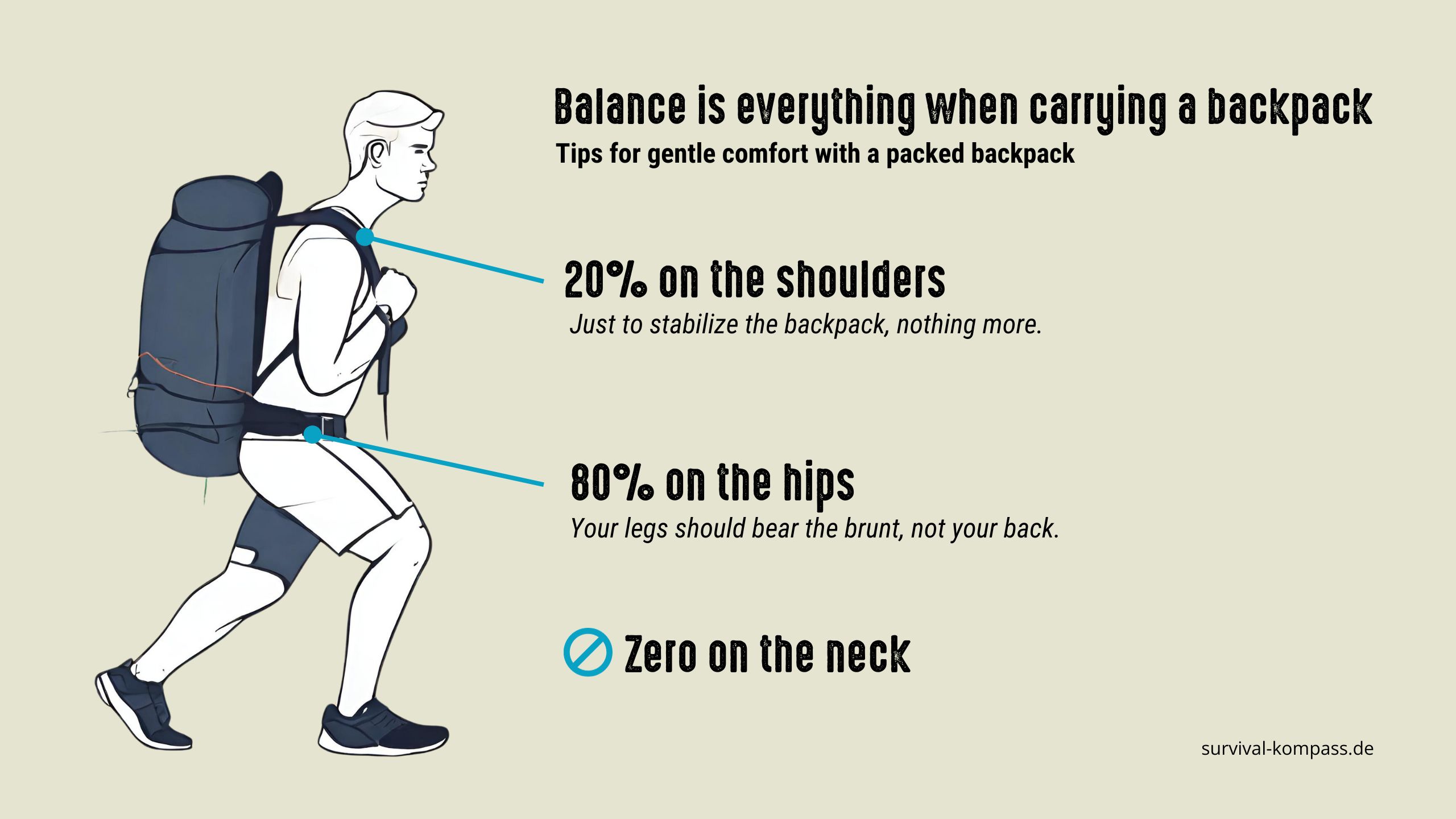
While waist and chest belts appear most commonly on hiking and technical backpacks, these features provide substantial ergonomic benefits that everyday users frequently overlook. The waist belt transfers up to 80% of the backpack’s weight from the shoulders to the hips, where the body’s larger and stronger muscle groups can handle loads more efficiently. This hip-centered weight distribution reduces shoulder fatigue dramatically and enables more comfortable carry over extended periods that would otherwise cause significant discomfort.
When selecting a backpack, look for a waist belt with substantial padding that contours to your hip shape rather than digging in. The belt should sit on your hip bones (iliac crest), not your waist, to properly transfer weight to your skeletal structure. Properly adjusted, this feature makes even heavy loads feel significantly lighter during extended wear.
Preventing Lower Back Strain with Proper Backpack Positioning
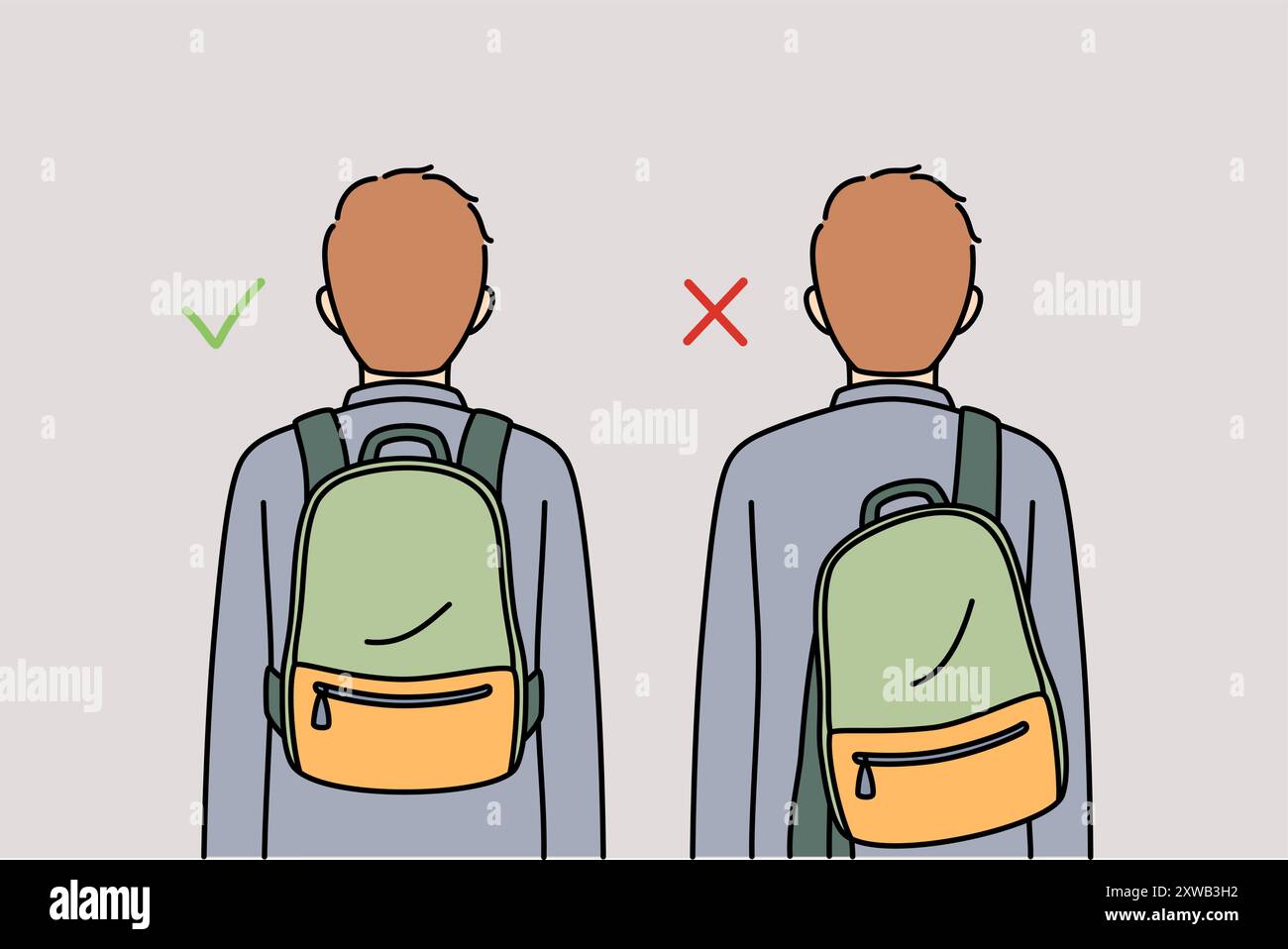
The position of your backpack on your body matters as much as the act of wearing it properly. The ideal position places the top of the backpack just below your shoulders while the bottom rests above your hips, typically around the lower back region. A backpack that hangs too low pulls your spine backward, increasing strain on the lower back and forcing you to lean forward to compensate for the shifted center of gravity.
To check proper positioning, stand in front of a mirror with your loaded backpack. The bottom of the pack should sit no lower than two inches above your waistline. If you notice your shoulders rounding forward or your head jutting forward while wearing the pack, the backpack is likely positioned too low or overloaded. Correct positioning prevents the “hunchback” posture that many chronic backpack users develop over time.
Strategic Weight Distribution That Reduces Spinal Leverage
Backpacks equipped with multiple compartments serve ergonomic purposes beyond mere convenience and organization. Proper weight distribution within these compartments significantly impacts the effort required to carry the load comfortably. The fundamental principle involves placing heavier items closest to your back, which dramatically reduces leverage forces that would otherwise strain your spine.
When heavy items sit farther from your body, they function like a pendulum, multiplying the muscular effort required to maintain stable posture throughout movement. Organizing pack contents by weight—with the heaviest items nearest your back and lighter items toward the exterior—optimizes the ergonomic benefits that the backpack’s design provides. This arrangement keeps the center of gravity close to your body, minimizing the rotational forces that cause fatigue and strain during extended wear.
Pro tip: Pack your laptop, textbooks, or water bottles against your back panel, with lighter items like clothing or snacks toward the outer compartments. Your spine will thank you during that long commute or campus trek.
10-20% Body Weight Limit That Prevents Chronic Injury

Understanding and adhering to proper weight limits represents one of the most critical factors in preventing backpack-related injury and discomfort. The general guideline establishes maximum backpack weight between 10 and 20 percent of your body weight, though individual circumstances and carrying conditions influence the appropriate limit within this range.
For practical application, a child weighing 100 pounds should carry no more than 10 to 15 pounds, while an adult weighing 160 pounds should keep their load under 24 pounds to maintain ergonomic safety. These percentages work reasonably well for casual users carrying backpacks for short durations, but the formula becomes less applicable for adults carrying loads over extended distances or challenging terrain.
Backpacks frequently become mobile storage closets, accumulating items that serve no immediate purpose but add cumulatively to the carried weight. Develop the habit of weighing your fully loaded backpack once a week to maintain awareness of your total load. Taking the backpack off during prolonged stationary periods—such as waiting in line or standing at bus stops—prevents sustained compression on spinal discs that accumulates fatigue even faster than movement with the pack.
How to Identify Structurally Sound Backpacks That Maintain Shape
A backpack capable of standing upright on its own typically possesses a more structured base that contributes significantly to ergonomic performance. This structural rigidity prevents the sagging and twisting that pulls the spine out of proper alignment during wear. When a backpack collapses against your back, it creates uneven pressure points and forces your body to compensate for the shifting center of gravity, increasing the muscular effort required to maintain stable posture.
Reinforced bottom panels and internal frame structures provide the necessary rigidity to maintain shape under load, ensuring consistent contact between the backpack’s back panel and your spine. When evaluating potential backpack purchases, test whether the bag maintains its shape when placed on the ground and whether the back panel provides consistent support regardless of how fully the pack is loaded. Squeeze the sides of the backpack—if it collapses easily, it lacks the structural integrity needed for proper weight distribution.
Choosing Between Casual, Hiking, and Travel Backpacks for Your Needs
Selecting an ergonomic backpack requires matching design features to your intended use cases and physical characteristics. Casual and laptop backpacks prioritize everyday comfort and organizational features, typically incorporating padded laptop sleeves, multiple compartments, and contoured shoulder straps that accommodate daily commuting and school use. These bags range from 24 liters for minimal everyday carry to 42 liters for users requiring additional capacity.
Outdoor and hiking backpacks emphasize durability, weight distribution, and comfort over extended distances. These designs incorporate breathable mesh panels that reduce perspiration buildup, reinforced construction using abrasion-resistant materials like Cordura nylon, and suspension systems optimized for heavy loads. Travel-specific backpacks balance capacity requirements with airport-friendly design, often incorporating features like detachable day packs that serve dual purposes during destination travel.
Daily Maintenance Habits That Preserve Ergonomic Performance
Preserving ergonomic performance over your backpack’s lifespan requires regular maintenance attention to the features that provide comfort and support. Develop the habit of emptying and reorganizing your backpack before each new venture—this prevents the accumulation of unnecessary items and ensures optimal load distribution. Removing every item and rebuilding the load from scratch forces conscious evaluation of each item’s necessity.
The padded straps, waist belts, and chest straps that distribute weight effectively require regular inspection for wear, compression, and degradation. Padding that has compressed permanently loses its ability to reduce pressure points effectively, transforming comfortable straps into sources of persistent discomfort. Check your straps monthly for permanent indentations or flattened areas that indicate it’s time for replacement.
Key Takeaways for Pain-Free Backpack Use
Achieving optimal backpack ergonomics design benefits requires attention to both equipment selection and usage habits. Always wear both shoulder straps to maintain balanced load distribution across your body. Position your backpack with its top just below your shoulders and bottom resting above your hips. Organize contents with heavier items closest to your back to minimize leverage forces. Adhere to weight limits of 10 to 20 percent of your body weight, removing the backpack during prolonged stationary periods.
When purchasing a new backpack, prioritize wide, padded shoulder straps with contoured profiles that conform to your body geometry. Ensure the backpack features a structured base capable of maintaining its shape under load, and consider models with waist and chest belts that transfer weight to your hips where your body can handle loads most efficiently. These principles transform what could be a source of chronic discomfort into a comfortable, supportive companion for daily activities, professional demands, and outdoor adventures alike.
Leave a Reply