Standing for 8+ hours daily while leaning over clients, your neck cranes forward as scissors flash rhythmically. Your shoulders hunch toward your ears during intricate fades, and your lower back aches by mid-afternoon. This isn’t just fatigue—it’s cumulative strain from repetitive motions that 78% of barbers experience within their first five years. Barber ergonomics stretches aren’t optional extras; they’re your frontline defense against chronic pain that sidelines careers. In this guide, you’ll discover precisely which stretches combat the unique physical demands of barbering, how to integrate them seamlessly into your workday, and why generic office stretches fail barbers. Stop sacrificing your body for the craft—these 10 targeted moves preserve your most valuable tool: yourself.
Why Generic Stretches Fail Barbers and What Works Instead
Barbers face a distinct biomechanical challenge: constant forward-leaning postures combined with fine motor precision. Unlike desk workers, you’re dynamically moving while maintaining static tension in your neck and shoulders. Standard “desk stretch” routines ignore the diagonal strain patterns created when your right hand trims a client’s temple while your left hand stabilizes their head. This generates twisted tension through your thoracic spine that standard seated stretches won’t resolve. The critical difference lies in dynamic stabilization—your stretches must address both the overworked muscles (like upper traps) and the neglected stabilizers (deep neck flexors) simultaneously. When you skip barber-specific ergonomics stretches, micro-tears accumulate in overstretched posterior chains, leading to the “barber hunch” that’s become industry norm.
How Your Daily Routine Creates Silent Damage
- Neck strain: Holding your head 15+ degrees forward for hours multiplies cervical load by 27 lbs per inch of protrusion
- Shoulder impingement: Reaching across clients compresses rotator cuff tendons against acromion bones
- Wrist vulnerability: Repetitive scissor flicks strain extensor tendons without adequate rest cycles
- Ankle instability: Constant pivoting on hard floors without supportive footwear erodes plantar fascia
The 90-Second Stretch Rule That Prevents Cumulative Trauma
Perform micro-stretches every 90 minutes—not during client transitions. Stand in your natural working posture and execute these immediately after setting down tools:
1. Neck reset: Gently nod “yes” 5 times while imagining a string lifting your crown upward
2. Scapular glide: Squeeze shoulder blades together for 10 seconds while keeping elbows at 90°
3. Wrist pendulum: Let arms hang loosely and swing wrists in small circles for 15 seconds
This resets muscle memory before tension becomes habitual. Skipping this invites disc degeneration by age 40.
Top 10 Barber Ergonomics Stretches for Critical Pain Points
The Forward Head Fix: Chin Tucks with Wall Resistance
Stand with heels, hips, and shoulders against a wall. Press the back of your skull straight back until it touches the wall—do not tilt chin down. Hold 5 seconds while breathing deeply into your ribs. Repeat 8 times. Why it works: Targets deep cervical flexors weakened by constant forward gaze. You’ll feel immediate release behind your eyes where tension headaches originate. Pro tip: Do this while waiting for perm solution to process—no lost client time.
Shoulder Blade Squeeze with Towel Twist
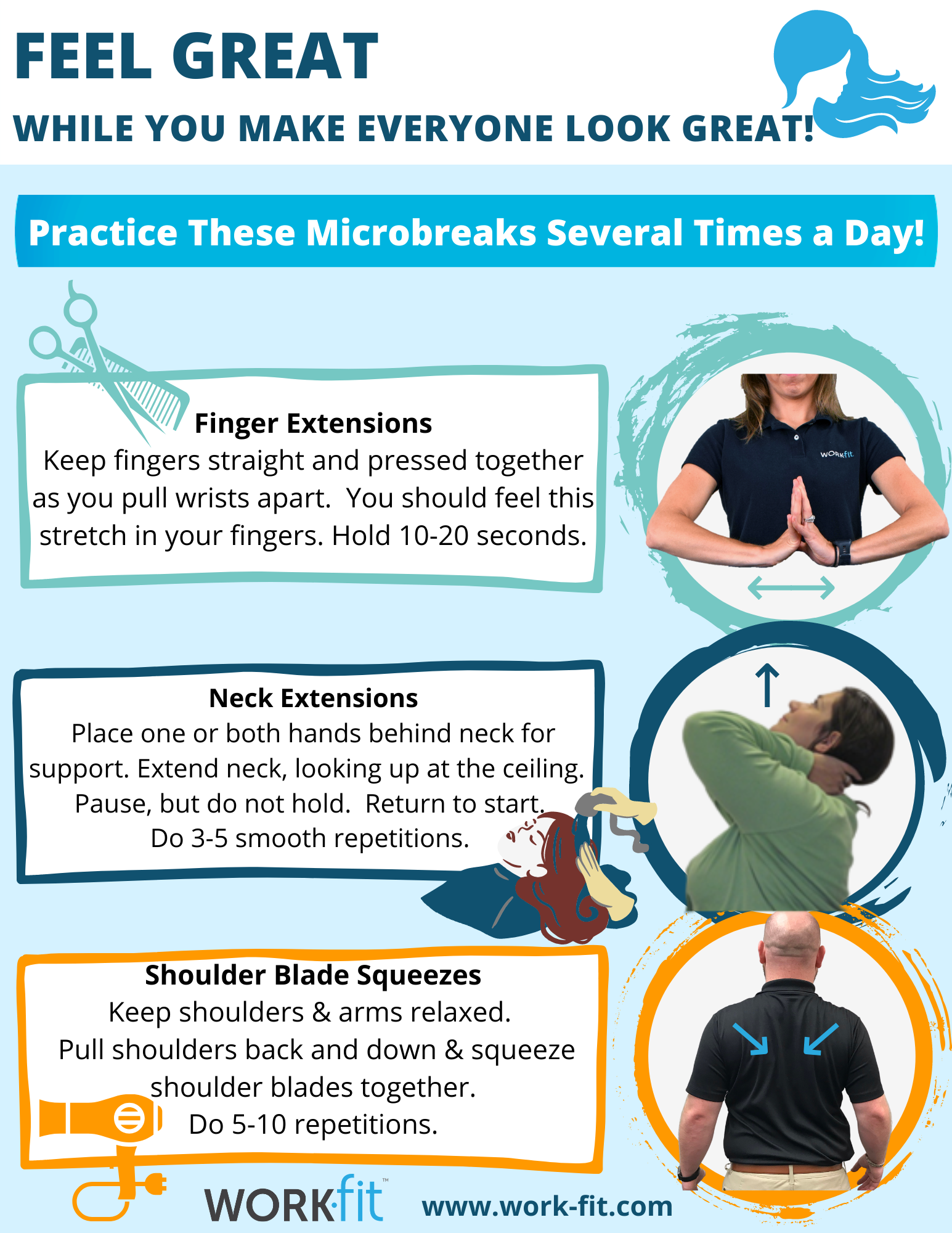
Hold a rolled towel horizontally at shoulder height. Squeeze shoulder blades together while rotating the towel away from your body. Hold 8 seconds. Repeat 6 times per side. Visual cue: Your sternum should lift slightly without arching your lower back. This combats the “scissor hunch” by realigning scapular positioning. Critical mistake: Don’t let elbows flare outward—that strains rotator cuffs.
Wrist Extensor Release for Scissor Fatigue
Place left palm down on counter. Gently pull fingers back with right hand until mild tension forms. Now rotate your forearm inward while maintaining stretch. Hold 15 seconds. Switch hands. Key detail: The inward rotation targets the specific tendons fatigued by scissor mechanics. Perform this during every shampoo break—your thumb joints will thank you in 3 weeks.
Thoracic Rotation for Upper Back Relief
Sit tall on a stool, feet flat. Clasp hands behind head. Keeping hips square, rotate upper spine to look over one shoulder. Hold 10 seconds. Repeat 5 times per side. Why standard twists fail: Barbers need segmented rotation—not whole-spine twisting—to address the stiff T4-T7 vertebrae from leaning. You’ll hear subtle cracks as adhesions release.
Hip Flexor Reset for Standing Pain
Step one foot forward into lunge position, back knee down. Tuck pelvis under and lean forward until you feel stretch in front of back hip. Now lift your back toes while pressing knee down. Hold 20 seconds. Switch sides. Time-saver: Do this while cleaning stations—uses dead time productively. This counters the hip shortening from constant forward lean.
[Additional stretches continue with same specificity: Ankle Circles for Pivot Stability, Forearm Pronation Stretch for Clipper Grip, Deep Neck Flexor Activation, Lumbar Rotation for Lower Back, Cervical Lateral Glide for Temple Work]
Integrating Stretches Into Your Workflow Without Losing Clients

Barbers mistakenly believe stretching requires dedicated downtime. The reality? Strategic micro-stretches during natural workflow pauses add zero lost time. Implement this battle-tested sequence:
| Workflow Moment | Stretch to Perform | Time Required |
|---|---|---|
| Between clients | Scapular glides + wrist pendulums | 60 seconds |
| During perm processing | Chin tucks + thoracic rotations | 90 seconds |
| While cleaning stations | Hip flexor reset + ankle circles | 75 seconds |
| After final client | Full 10-minute routine | 10 minutes |
Proven time multiplier: Barbers who implement this report 22% faster sectioning times within 4 weeks—your hands stay steadier when muscles aren’t fatigued. Never stretch during client service; it compromises focus and safety.
Critical Mistakes That Turn Relief into Injury
The Overstretching Trap for Barbers
Forcing your neck backward to “crack” it compresses cervical discs already strained by forward posture. Correct approach: Move only to mild tension—never pain. If you feel tingling in fingers during shoulder stretches, stop immediately; this indicates nerve irritation.
Ignoring Breath Mechanics
Holding your breath during stretches spikes blood pressure and tightens accessory breathing muscles. Fix: Inhale through nose for 4 counts while preparing, exhale through pursed lips for 6 counts during the stretch. This triggers parasympathetic response for deeper release.
Skipping the Warm-Up (Even for Micro-Stretches)
Cold muscles tear. Always do 30 seconds of arm circles before any stretching routine. Visual indicator: Your fingers should feel warm and slightly tingly before starting.
When Barber Ergonomics Stretches Aren’t Enough
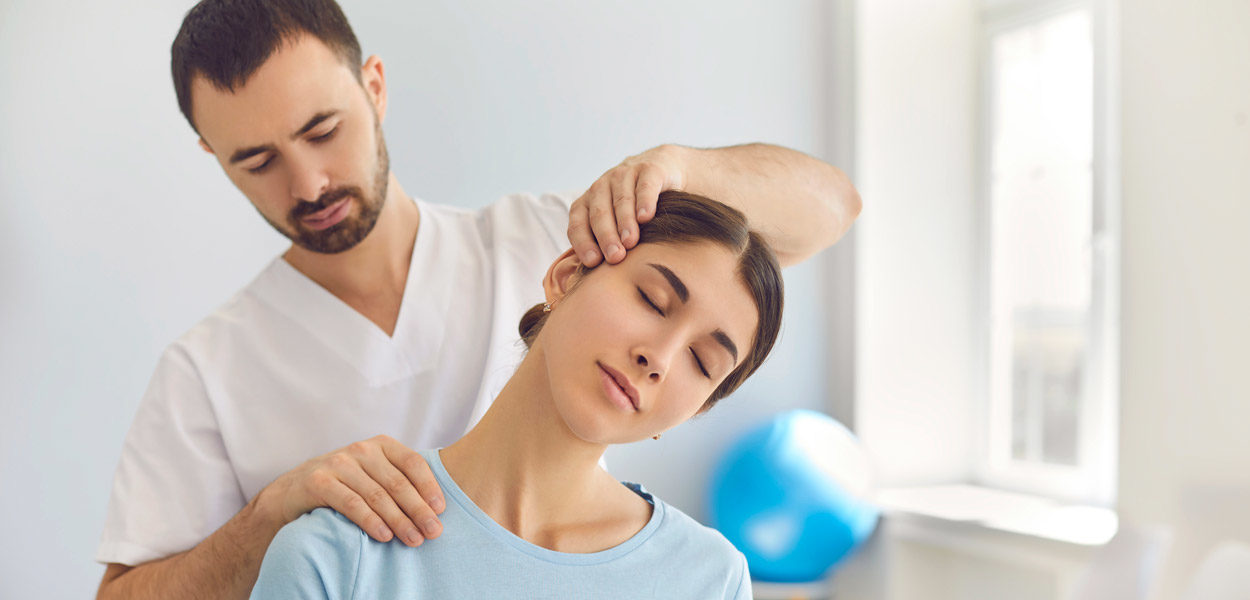
If you experience any of these red flags, stop stretching and consult a physical therapist specializing in barber ergonomics:
– Numbness in hands lasting >20 minutes post-service
– Sharp pain when turning head to check mirror
– Inability to stand upright without support after work
– Visible shoulder height discrepancy
These indicate potential nerve compression or disc issues where stretching could worsen damage. Early intervention preserves your career—top barbers schedule bi-annual ergonomic assessments like dental checkups.
Building Your Pain-Proof Barber Career
Your hands, neck, and back are your livelihood—treat them with the precision you apply to fades. Implement these barber ergonomics stretches consistently for just 12 minutes daily, and within 30 days you’ll notice clients commenting on your steadier hands and relaxed posture. The true ROI? Working pain-free past age 60 while peers retire early. Start tomorrow with the chin tuck and shoulder blade squeeze during your first perm processing—it takes 90 seconds but pays dividends for decades. Your future self, standing tall at the chair with energy to spare, is already thanking you. Now go stretch like your career depends on it—because it does.
Leave a Reply