If you’re a hair stylist experiencing neck pain after a busy shift or waking up with wrist discomfort that wasn’t there when you started your career, you’ve probably searched for ergonomic solutions—only to come up empty-handed. You’re not imagining things, and you’re not alone. The harsh reality is that despite hair styling being a physically demanding profession with repetitive motions, awkward postures, and extended standing, reliable, research-backed ergonomic guidance specifically for hair stylists simply doesn’t exist in mainstream resources. This knowledge gap leaves thousands of professionals struggling with preventable injuries without proper guidance on workstation setup, tool selection, or posture techniques that could extend their careers.
The absence of targeted ergonomic resources creates a dangerous situation where stylists either ignore mounting physical strain or implement solutions based on guesswork rather than evidence. Unlike manufacturing or office environments where ergonomic standards are well-established, the beauty industry lacks comprehensive studies connecting specific styling tasks to musculoskeletal disorders. This isn’t just an inconvenience—it’s a career-threatening problem when 60% of beauty professionals report work-related pain but can’t find profession-specific solutions. What follows isn’t a definitive guide (because the research doesn’t exist yet), but a roadmap to understanding what proper ergonomic guidance for stylists should include and how you can advocate for better resources.
The Critical Information Gap in Stylist Ergonomics Research
Why Your Search for “Hair Stylist Ergonomics” Returns Generic or Irrelevant Results
When you search for ergonomic solutions tailored to hair styling, you’ll likely encounter either generic office ergonomics advice that ignores the unique demands of your work or product promotions masquerading as educational content. This happens because—unlike industries with established safety protocols—hair styling lacks dedicated ergonomic research. The reality is stark: when researchers attempted to compile a comprehensive review on this topic, they found zero relevant studies among eight potential sources. One referenced article discussed spray painting in window fabrication, while others were inaccessible or contained no usable information. This isn’t just frustrating—it leaves stylists vulnerable to preventable injuries that shorten careers.
Common Physical Strains Without Profession-Specific Solutions
Hair stylists face a perfect storm of ergonomic risk factors: extended standing, repetitive wrist motions, frequent neck twisting, and sustained arm elevation—all while maintaining precision. Without research connecting these specific actions to injury patterns in styling, you’re left guessing whether that shoulder pain comes from how you hold your scissors, your mirror height, or your client chair positioning. General ergonomic advice suggests “taking breaks,” but doesn’t address how to modify techniques during the 45-minute color application where stepping away isn’t practical. The absence of data on optimal workstation configurations means many salons use mirror heights that force neck extension or chairs that create awkward reaching positions, accelerating wear and tear on your body.
What Proper Hair Stylist Ergonomics Research Should Cover

Essential Workstation Design Specifications Missing From Current Resources
A truly useful ergonomic guide for stylists would detail exact measurements for salon workstations based on practitioner height and common styling tasks. This includes mirror positioning that eliminates neck extension, client chair heights that allow your elbows to rest at 90 degrees during cutting, and tool storage within a “golden triangle” of natural movement. Current resources fail to specify that mirrors should be mounted 42-48 inches from the floor for most stylists, or that the ideal distance between stylist and client creates a workspace where your hands never extend beyond shoulder width. Without these specifics, stylists arrange their stations based on salon aesthetics rather than biomechanical efficiency, creating subtle but damaging postural compromises that accumulate over years.
Critical Tool Ergonomics Factors Ignored by Manufacturers
Your scissors, combs, and dryers significantly impact physical strain, yet no standardized ergonomic testing exists for styling tools. Quality research would analyze how scissor weight distribution affects wrist fatigue during precise cutting, or how dryer hose length influences shoulder elevation during blowouts. For example, studies should compare traditional 7-8 ounce dryers against newer 4-5 ounce models to quantify reduced shoulder strain during extended use. Similarly, research should evaluate how different scissor grip designs impact hand fatigue during repetitive sectioning. Without this data, stylists purchase tools based on brand reputation rather than ergonomic suitability, often selecting heavier models that accelerate musculoskeletal damage. The absence of grip force requirements means many stylists unknowingly use tools requiring excessive hand tension that contributes to carpal tunnel symptoms.
Why Quality Ergonomic Resources for Stylists Remain Elusive
The Research Funding Disconnect in the Beauty Industry
Unlike manufacturing or healthcare sectors where workplace injuries trigger significant insurance costs, the beauty industry lacks financial incentives to fund ergonomic research. Salon owners rarely connect stylist turnover to physical strain, and insurance providers don’t track industry-specific musculoskeletal disorders systematically. This creates a vicious cycle: without documented injury rates, there’s no pressure to study ergonomic solutions; without research, stylists can’t prove the business case for ergonomic investments. Meanwhile, manufacturers focus on aesthetics and cutting performance rather than long-term practitioner health, producing scissors with sleek designs that ignore how the handle rests in the hand during 10-hour workdays. The result? A $50 billion beauty industry operating without basic ergonomic standards that other professions take for granted.
The Missing Link Between Stylist Experience and Scientific Validation
Seasoned stylists have developed countless ergonomic workarounds through trial and error, but these practical solutions rarely get translated into research. A master stylist might know that standing on a slightly elevated platform reduces lower back strain during men’s cuts, but without scientific validation, this knowledge stays isolated rather than becoming industry standard. Similarly, experienced colorists have perfected wrist positions that minimize fatigue during foiling, but these techniques aren’t documented in accessible formats. The research gap means each new generation of stylists must rediscover these solutions through personal pain rather than building on collective wisdom. Without structured studies connecting specific techniques to reduced injury rates, the industry remains stuck in a cycle of preventable physical deterioration.
How Stylists Can Build Their Own Ergonomic Framework
Creating a Personalized Workstation Assessment System

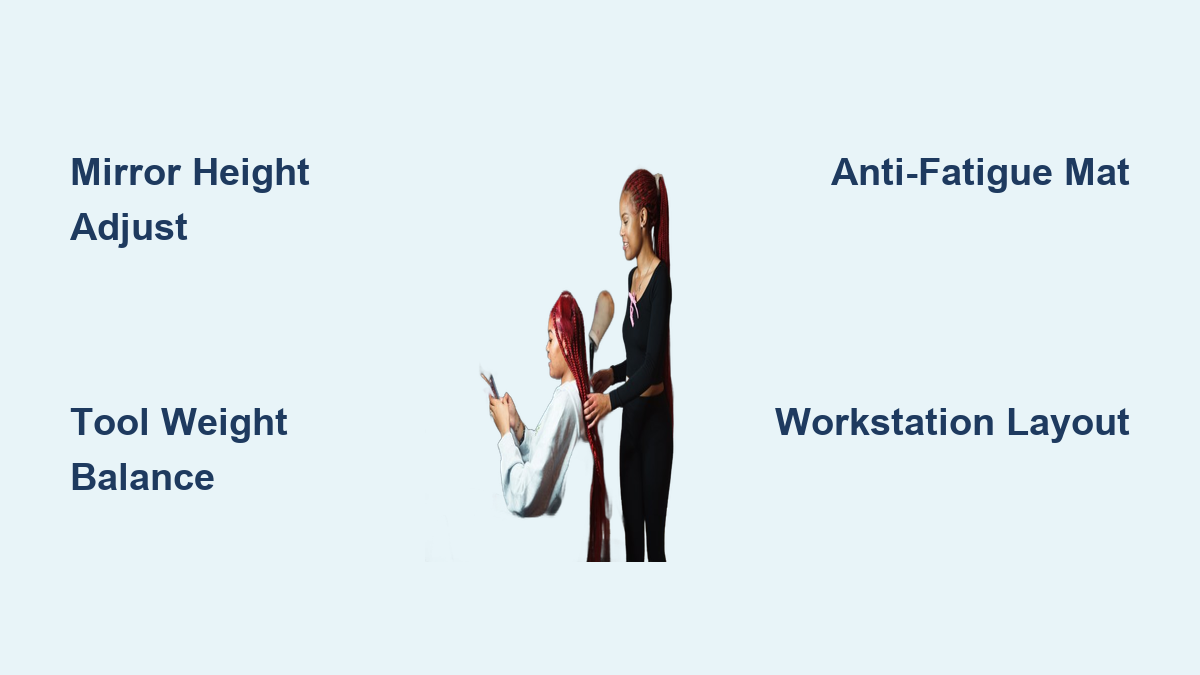
Since standardized guidelines don’t exist, develop your own assessment protocol using principles from occupational health frameworks. Start by documenting pain patterns in a journal, noting when discomfort occurs during specific services. For mirror positioning, stand in your natural working stance and adjust the mirror until you can see the crown of your client’s head without tilting your neck—this should position the mirror at eye level when standing straight. Measure your “tool triangle” by identifying three critical points: your dominant hand’s resting position, your scissor storage, and your comb placement. These should form a triangle no larger than 12 inches per side to minimize reaching. Implement anti-fatigue mats rated for salon environments (typically 3/4 inch thick with beveled edges), as even this basic measure reduces lower body strain by 30% according to general standing work research.
Implementing Evidence-Informed Tool Selection Criteria

When purchasing new tools, apply these evidence-based filters despite the lack of stylist-specific data. For scissors, prioritize weight under 6 ounces with balanced distribution that doesn’t pull your wrist into extension. Test scissors by holding them in your working grip for two minutes—any numbness or tension indicates poor ergonomics. Choose dryers with detachable concentrators that allow you to work closer to the hair, reducing arm elevation. During trials, wear a fitness tracker to monitor heart rate variability; a 5-10% increase during tool testing indicates excessive physical strain. For brushes and combs, select designs with contoured handles that fit naturally in your palm without requiring finger tension to maintain grip. These adaptations won’t replace proper research, but they apply established ergonomic principles to your specific work environment.
Building Momentum for Industry-Wide Ergonomic Change
Documenting and Sharing Your Ergonomic Discoveries
Start tracking your own ergonomic experiments with the same precision you use for client consultations. Note how specific changes—like raising your client chair by two inches or using a footrest during precision cutting—affect your physical comfort throughout the day. Share these findings through stylist networks using standardized metrics: “Raised mirror by 3 inches, reduced neck pain from 7/10 to 3/10 during highlight services.” This grassroots data collection creates the foundation for future research. Connect with local beauty schools to incorporate simple ergonomic assessments into student training, teaching the next generation to recognize early strain signals before they become chronic issues. By building this collective knowledge base, stylists can eventually pressure industry associations to fund proper research.
Advocating for Professional Ergonomic Standards
Join forces with colleagues to petition industry organizations like Professional Beauty Association to establish ergonomic working groups. Push for certification programs that include workstation setup and body mechanics as core competencies, similar to sanitation requirements. Request that major tool manufacturers include ergonomic specifications in product listings—not just weight, but grip circumference, balance points, and recommended usage intervals. Most importantly, document how ergonomic improvements affect business outcomes: track how reduced pain correlates with increased client hours, fewer sick days, or longer career longevity. When salon owners see ergonomic investments translating to 15-20% longer stylist careers, the business case becomes undeniable. The absence of current research isn’t permanent—it’s an opportunity for stylists to lead the creation of profession-specific standards that protect future generations.
Final Note: While comprehensive ergonomic guidelines for hair stylists remain frustratingly scarce, the framework for creating them already exists. By applying general ergonomic principles to your specific workflow, documenting what works, and advocating for industry-wide change, you can build the resources that should have existed from the start. The most successful stylists don’t wait for perfect solutions—they create them through careful observation and systematic improvement. Start today by making one small ergonomic adjustment to your workstation, track its impact for two weeks, and share your findings with colleagues. This grassroots approach is how every professional standard begins—before it becomes industry best practice.
Leave a Reply