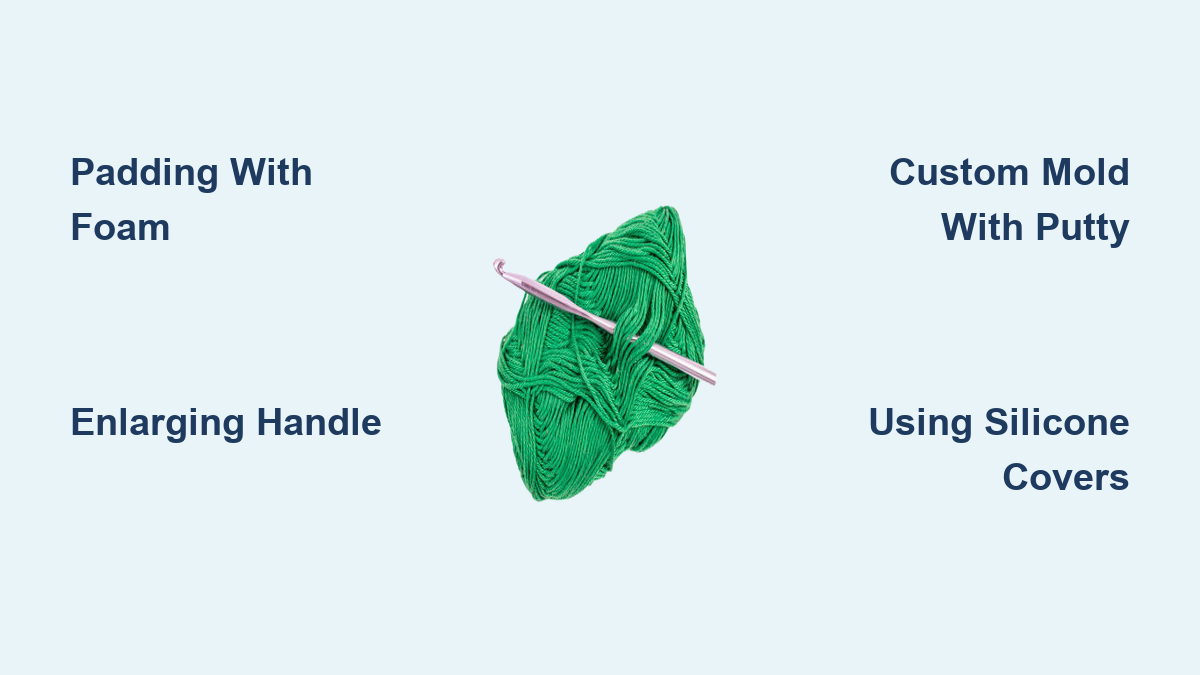
Crochet offers a meditative creative outlet, but the repetitive motion of working yarn can take a serious toll on your hands, wrists, and joints. If you’ve ever finished a crafting session with aching fingers or struggled to grip your hook after just a few rows, you’re not alone—hand fatigue, arthritis pain, and carpal tunnel symptoms affect countless crafters who spend hours with their hooks. The good news is that you don’t need to abandon your favorite hobby or invest in expensive specialty hooks to find relief. Learning how to make a crochet hook ergonomic opens up a world of comfortable crafting possibilities using simple materials you likely already have at home. This guide walks you through proven modification techniques that transform standard hooks into comfortable tools tailored to your unique hand shape and crafting style.
Why Standard Hooks Cause Hand Pain
Standard crochet hooks feature thin, smooth handles that force your hand muscles to work overtime just maintaining a secure grip. The muscles in your palm and fingers must continuously contract to prevent the hook from slipping, and this constant tension leads to fatigue, pain, and potentially serious repetitive strain injuries over time. Ergonomic hooks address this problem by redistributing pressure across a larger surface area and reducing the grip force required to control the hook effectively. When your hand can relax rather than constantly gripping, you significantly decrease the stress on tendons, joints, and muscles that cause crafting-related discomfort.
How Hand Anatomy Affects Crochet Comfort
Your hand contains numerous bones, muscles, and tendons that must work in concert during crochet work, and thin handles create pressure points that tire these structures quickly. By increasing handle diameter, adding cushioning, and shaping the grip to match your hand’s natural contours, you allow muscles to work more efficiently and reduce the repetitive stress that leads to crafting injuries. The result is longer, more comfortable crafting sessions that don’t leave you wincing in pain.
Transform Your Hook with Simple Padding Techniques

Adding cushioning to your hook’s handle represents the quickest and most accessible path to ergonomic improvement. Several padding materials work exceptionally well, each offering different levels of comfort and durability.
Apply Foam Pipe Insulation for Instant Relief
Foam pipe insulation stands out as one of the most economical padding options available. This inexpensive material, typically sold in 6-foot sections at hardware stores for just a few dollars, can be slit lengthwise and wrapped around existing hook handles. The soft, compressible foam provides substantial cushioning that absorbs pressure and significantly reduces the grip force required to hold your hook securely. To apply, simply split the insulation tube, slide it over your hook’s handle, and secure it with tape if necessary. You can layer multiple strips for even more padding, and the foam’s cellular structure conforms to your hand over time for personalized comfort.
Use Silicone Covers for Durable, Tacky Grip
Silicone handle covers offer a more durable alternative that slides onto standard hooks and provides cushioning with a slightly tacky surface that improves grip. These covers are dishwasher safe, easy to clean, and available in various thicknesses and colors. Many crafters appreciate that silicone maintains its cushioning properties indefinitely, unlike foam which compresses over time. Some silicone designs feature contoured shapes that specifically target pressure points in the palm, providing therapeutic benefits that generic padding cannot match.
Create Custom Grips with Dental Impression Putty
For the most personalized ergonomic solution, dental impression putty allows you to create custom-molded grips with professional-quality results. Begin by protecting your hook shaft with plastic wrap, then mix the putty according to package directions and work quickly before it sets. Press the mixed putty firmly around your hook handle, using your thumb and fingers to create comfortable indentations where your grip naturally contacts the handle. The putty begins setting within a few minutes, so work efficiently to shape the contours before it hardens. Once fully cured according to package directions—typically five to ten minutes—you’ll have a handle that fits your hand like a custom glove.
Enlarge Your Handle Diameter for Reduced Grip Force
Increasing handle diameter reduces the grip force required to hold your hook securely, making diameter enlargement a cornerstone of ergonomic hook modification. Several methods achieve this enlargement with varying levels of permanence.
Build Handles with PVC Pipe Sections
PVC pipe sections provide a sturdy foundation for building up handle diameter. Cut sections of PVC pipe in various diameters and slide them over existing hook shafts to create comfortable, substantial handles. The pipe can be sanded smooth and painted or decorated to match your personal style. Different pipe diameters allow you to experiment and discover your optimal handle size—many crafters find that handles between ¾ inch and 1¼ inches provide the best combination of comfort and control. For crafters who prefer slightly heavier hooks, adding sand or rice inside the pipe before sealing the ends creates weight that provides momentum during yarn work, reducing the effort required to move the hook through stitches.
Sculpt with Polymer Clay for Perfect Fit
Polymer clay opens up complete customization possibilities for handle shaping. By baking polymer clay around hook handles, you can create grips that include finger grooves, thumb rests, and other ergonomic features tailored exactly to your hand’s unique shape. The clay can be textured, painted, and decorated after baking for a personalized finish that reflects your style. This method produces permanent, durable handles that maintain their shape indefinitely and withstand regular use without degradation.
Select the Best Material for Your Needs

The material you choose for your ergonomic handle significantly impacts comfort, durability, and crafting experience. Understanding the properties of different materials helps you select the best option for your specific situation.
Choose Soft Materials for Maximum Cushioning
Soft materials like rubber and silicone provide excellent cushioning and shock absorption that reduces hand fatigue during extended sessions. Rubber handles remain comfortable even after hours of continuous use and resist slipping when hands become sweaty during intense crafting. Silicone offers medical-grade hypoallergenic properties and exceptional softness, with a slight tack that provides grip without requiring tight gripping. Both materials are easy to clean and maintain their comfort properties over time.
Consider Natural Materials for Eco-Friendly Options
Natural materials like cork and wood provide unique combinations of cushioning, grip, and aesthetic appeal that many crafters prefer. Cork conforms slightly to hand pressure over time, creating a personalized fit while providing breathability that keeps hands comfortable. Wood offers natural warmth and texture that synthetic materials cannot replicate, with slight flexibility that reduces fatigue. Both materials are lightweight and environmentally sustainable, appealing to crafters who prioritize eco-friendly choices.
Compare DIY Modifications to Commercial Solutions
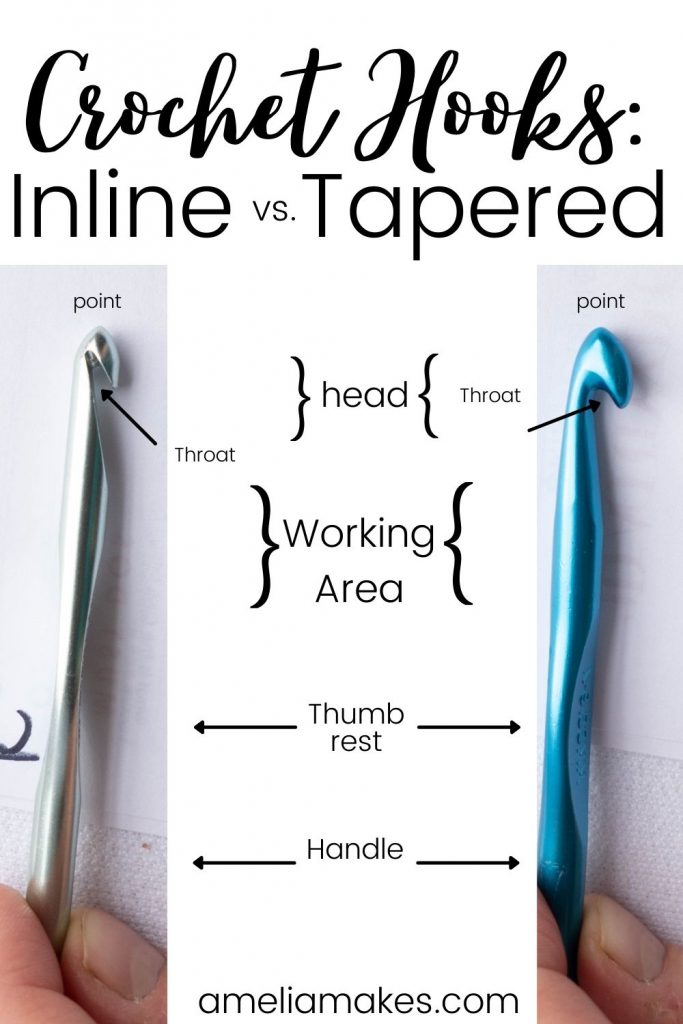
Both commercial ergonomic hooks and DIY modifications offer legitimate paths to comfortable crafting, each with distinct advantages that suit different situations and preferences.
Why DIY Modifications Beat Commercial Options
DIY modifications provide unmatched customization options that commercial products cannot match. You maintain complete control over handle diameter, shape, texture, and appearance, creating a grip tailored exactly to your hand’s unique anatomy. The cost remains a fraction of purchasing new ergonomic hooks, allowing you to ergonomicize your entire hook collection without significant expense. Material choices reflect your specific preferences for texture, weight, warmth, and appearance, and those with material sensitivities can select hypoallergenic options. Perhaps most appealing, modifications can be completed in minutes to hours, providing immediate relief from discomfort rather than waiting for shipping and delivery.
When Commercial Solutions Make Sense
Commercial solutions offer tested designs that reflect research into hand anatomy and crafting mechanics. Factory production ensures consistent quality and dimensions across multiple hooks, which matters for crafters who use several hooks of the same type. Manufacturer warranties protect against defects, providing peace of mind that DIY modifications cannot match. Additionally, commercial hooks often feature attractive designs and finishes that many crafters prefer over DIY appearances, and the psychological benefit of beautiful tools enhances the overall crafting experience.
Maintain Your Ergonomic Hooks for Long-Lasting Comfort
Proper care extends the life of your ergonomic modifications and ensures consistent comfort throughout your crafting journey. Different materials require different maintenance approaches that preserve their ergonomic properties over time.
Clean and Refresh Foam and Fabric Grips
Foam and fabric-based grips should be removed periodically for cleaning. Hand-wash with mild soap, rinse thoroughly, and allow to dry completely before reapplication. Moisture trapped beneath padding can degrade adhesives and promote mold growth, so ensure everything is fully dry before reassembly. Plan to replace foam padding annually or sooner with heavy use, as these materials compress over time and lose their ergonomic effectiveness.
Care for Wooden and Resin Handles
Wooden handles benefit from occasional application of mineral oil or wood polish. This treatment prevents drying and cracking while maintaining the wood’s natural beauty and comfort. Re-oil wooden handles every few months or whenever the wood appears dry or faded. Resin handles can be cleaned with mild soap and water, and polished with automotive compound if they become scratched or dull.
Extend Your Crafting Time with Ergonomic Upgrades
The ultimate goal of ergonomic modifications is enabling longer, more comfortable crafting sessions without pain interrupting your creative flow. Once you’ve implemented ergonomic solutions, a few additional strategies help you maximize your crafting time.
Implement the Twenty-Minute Rule
Taking regular breaks remains essential even with ergonomic equipment. The twenty-minute rule—setting a timer to remind yourself to shake out your hands and stretch every twenty minutes—prevents stiffness and maintains circulation during extended sessions. These brief pauses actually improve overall productivity by preventing the fatigue that forces premature session ends.
Match Hook Size to Yarn Weight
Matching your hook size to your yarn weight reduces the effort required for each stitch. Larger hooks with thicker yarn require less precise manipulation than fine hooks with delicate thread, reducing hand effort significantly. When possible, choose larger hooks and yarn weights for projects that will take many hours to complete.
Creating ergonomic crochet hooks opens the door to comfortable, sustainable crafting that protects your hand health for years of creative enjoyment. Whether you choose simple foam padding, custom-molded grips, or premium commercial hooks, the investment in comfort pays dividends in extended crafting sessions, reduced pain, and continued enjoyment of this beloved textile craft. Start with the simplest modifications to discover your preferences, then refine your approach based on what feels best during actual crafting sessions. Your hands will thank you for the care you invest in their comfort.
Leave a Reply