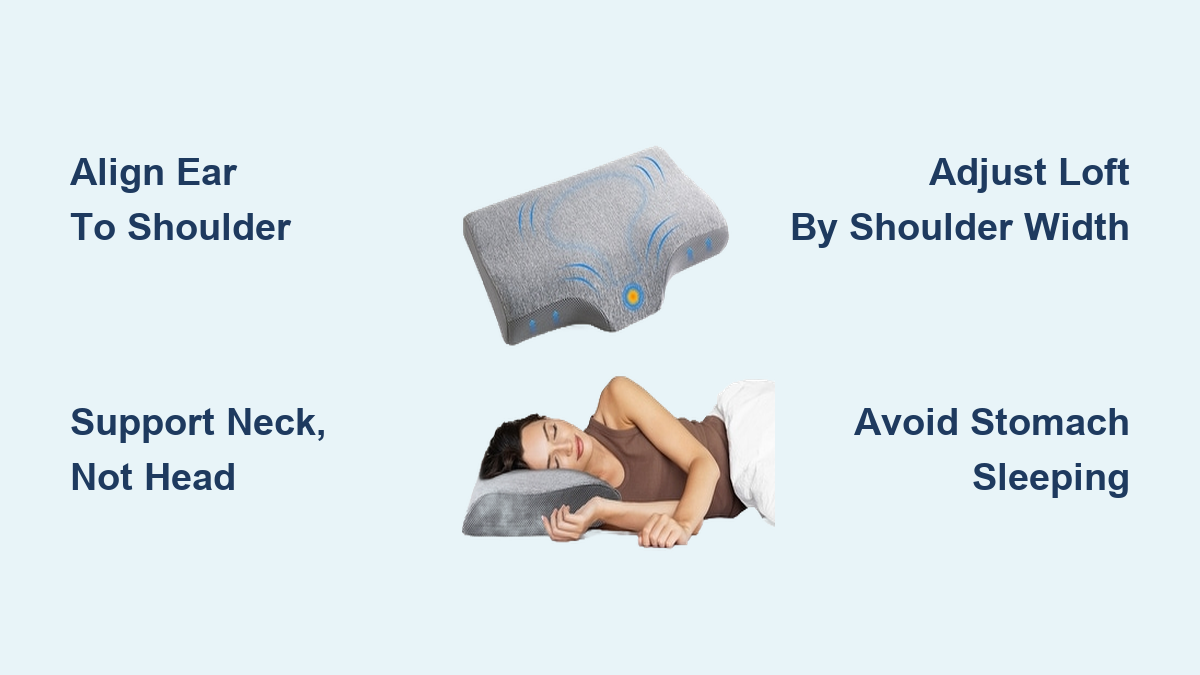
Waking up with stiff neck muscles or throbbing headaches? You’re not alone—nearly 65 million Americans experience chronic neck pain annually, and your pillow is often the silent culprit. Generic pillows collapse under pressure, forcing your spine into unnatural curves that strain muscles overnight. An ergonomic pillow solves this by maintaining neutral spinal alignment, but only if positioned correctly for your sleep style. Most people toss these specialized pillows onto their beds without adjusting them, wasting their $50-$150 investment while enduring preventable pain. This guide cuts through the guesswork with precise positioning techniques verified by sleep specialists. You’ll discover exactly how to align your head, neck, and shoulders—whether you’re a side sleeper, back sleeper, or occasional stomach flopper—and avoid the top mistakes that turn therapeutic support into torture. Get ready to transform restless nights into deep, pain-free sleep starting tonight.
Why Neck Pain Follows You Out of Bed (And How Pillow Alignment Fixes It)
Your spine has a natural S-curve that flattens when lying down. Without proper support, your neck kinks like a garden hose, compressing nerves and cutting blood flow to muscles. Generic pillows either sink too low (forcing your chin to your chest) or push your head too high (craning your neck upward), creating tension that builds into morning stiffness. Ergonomic pillows counter this with contoured zones: a higher ridge for your neck and a lower cradle for your head. When positioned correctly, they maintain that critical 15-20 degree angle where your ear lines up with your shoulder—reducing pressure on spinal discs by 40% compared to flat pillows. The key isn’t just owning one; it’s aligning the pillow’s curve precisely with your body’s natural posture. Misalignment by even 1 inch can trigger muscle spasms that last all day.
Check Your Current Pillow’s Damage in 30 Seconds
- Lie flat on your back without a pillow
- Have someone take a side photo of your profile
- Draw an imaginary line from your ear through your shoulder
If your chin points upward or downward, your pillow isn’t maintaining neutral alignment. This is why you wake up with “pillow neck.”
Measure Twice, Sleep Once: Finding Your Exact Pillow Height Needs
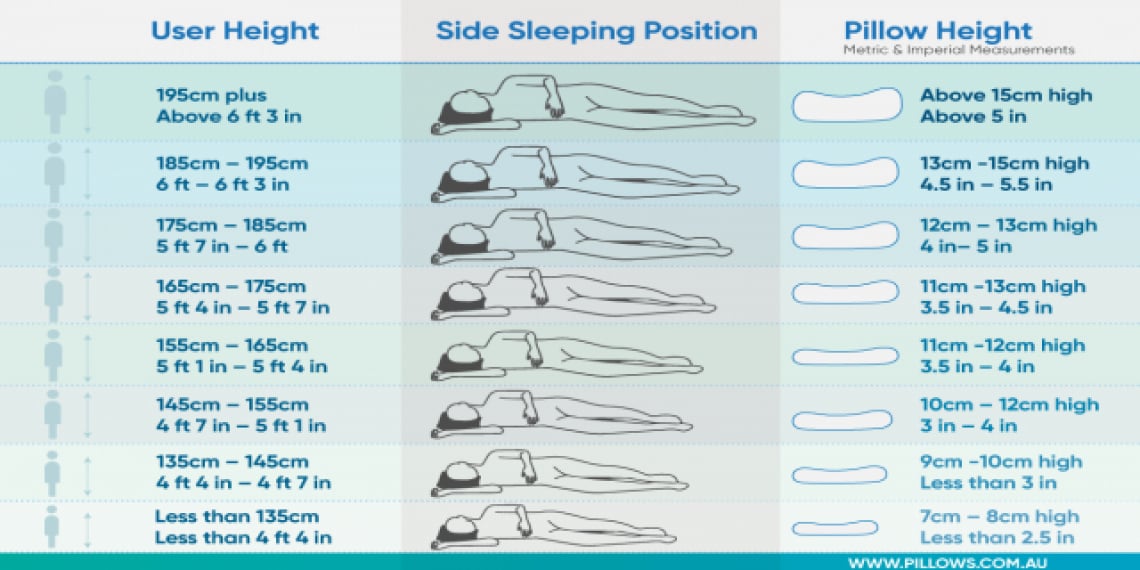
Ergonomic pillows aren’t one-size-fits-all—their magic happens when the neck support height matches your shoulder width. Most side sleepers need 4-5 inches of loft (height), while back sleepers require 3-4 inches. Grab a tape measure before setup:
– For side sleepers: Measure from the outside of your shoulder to the base of your neck while standing upright
– For back sleepers: Measure the distance from your collarbone to the base of your skull
Your pillow’s neck ridge should fill exactly that gap. Too tall? Your neck bends sideways like a broken hinge. Too short? Your head sinks, straining trapezius muscles. Adjustable pillows (like shredded memory foam models) let you add or remove filling—start with less and build up until your spine feels straight when lying down. Never compress the pillow to fit your current habits; reshape your posture to the pillow’s design.
Why Shoulder Width Determines Your Perfect Height
- Narrow shoulders (<16″): Need lower loft (3-4″)
- Average shoulders (16-18″): Ideal for standard ergonomic contours
- Broad shoulders (>18″): Require high-loft models (5″+)
Pro Tip: Place your hand flat under your neck while lying down. If you feel pressure on your palm, the pillow is too high. If your hand slips through gaps, it’s too low.
Back Sleeper Setup: Positioning Your Ergonomic Pillow for Spinal Neutrality
Back sleepers sabotage their ergonomic pillows by centering them under their entire head. The critical error? Letting the pillow push the head forward. Proper positioning requires strategic placement:
1. Place the pillow so the lower curve supports only your neck, not your head
2. Tilt your chin slightly downward (as if smelling a flower)
3. Slide your head forward until your ear aligns with your shoulder line
You should feel gentle traction in your neck—not pressure. If your forehead points toward the ceiling, pull the pillow 2 inches closer to your body. If your throat feels constricted, shift it slightly away. Test with the “book trick”: Balance a paperback on your forehead while lying down. If it slides off immediately, your head is tilted too far back. The book should stay put for 10 seconds.
3 Signs You’ve Nailed Back-Sleeper Positioning
- ✅ Your jaw feels relaxed (not clenched)
- ✅ You can swallow easily without straining
- ✅ A helper can slide two fingers under your neck with light resistance
Warning: Never use cervical pillows that force your head into extreme extension—they increase disc pressure by 200%.
Side Sleepers, Listen Up: Filling the Gap Between Head and Mattress

Side sleepers face the biggest ergonomic pillow challenges because generic pillows collapse under cheekbone pressure, dropping the head toward the mattress. The solution lies in the pillow’s shoulder well—the indented zone designed to cradle your shoulder. Here’s the exact setup:
1. Lie on your side and hug a pillow to your chest (this prevents shoulder rotation)
2. Position the ergonomic pillow so its deepest curve aligns with your armpit
3. Tilt your head slightly forward (chin over shoulder) until your spine feels straight
Your ear, shoulder, and hip should form a straight vertical line. If your top shoulder hunches upward, the pillow is too flat. If your head tilts backward, it’s too high. For broad-shouldered sleepers, place a rolled towel under the pillow’s shoulder well for extra lift—this mimics the pillow’s contour when compressed.
Critical Shoulder-Well Mistake 90% of Side Sleepers Make
Most people rest their head on the pillow’s highest point, but you should sink into the shoulder well until your neck feels supported. Press your cheekbone firmly into the pillow—if you feel bone-on-foam contact, reposition immediately. This well must compress 1-2 inches to maintain alignment; if it stays rigid, your pillow is too firm.
Stomach Sleepers Beware: Why Most Ergonomic Pillows Aren’t for You
Let’s be blunt: Stomach sleeping is terrible for spinal health. It forces 180-degree neck rotation, straining cervical ligaments all night. Most ergonomic pillows worsen this by adding height that cranks your neck further. If you can’t break the habit:
– Use the thinnest possible pillow (1-2″ loft) or skip it entirely
– Place it only under your forehead, not the back of your head
– Tuck arms under your chest to prevent shoulder elevation
Better solution: Transition to side sleeping with the “body pillow sandwich.” Hug a full-length pillow while placing your ergonomic pillow between your knees. This rotates your hips forward, making side sleeping comfortable within 3 nights. Never use contoured ergonomic pillows face-down—they lock your neck in dangerous hyperextension.
3-Step Adjustment Guide: Customizing Your Pillow’s Loft and Firmness
Your ergonomic pillow isn’t “set and forget.” Temperature, mattress firmness, and even weight changes require tweaks. Follow this weekly adjustment ritual:
Step 1: The Morning Alignment Check
Before getting out of bed, assess:
– Too high: Waking with tingling fingers or jaw pain
– Too low: Stiff neck muscles that “crack” when moving
– Just right: Neck feels relaxed with no pressure points
Step 2: Micro-Adjust Loft in 30 Seconds
- For shredded foam pillows: Remove filling through the zipper until your neck sinks 1 inch into the contour
- For solid memory foam: Place a folded towel under the shoulder zone only to elevate support
- For water pillows: Add/remove water in 50ml increments
Step 3: Reset Firmness After 3 Months
Memory foam compacts over time. Revive support by:
1. Exposing to sunlight for 20 minutes (UV rays reactivate foam cells)
2. Kneading the neck zone with your fists for 2 minutes
3. Rotating the pillow 180 degrees to use the “fresh” contour
Pro Tip: Set phone reminders to adjust loft seasonally—foam softens in summer humidity, requiring less filling.
5 Costly Ergonomic Pillow Mistakes That Worsen Neck Pain
Mistake #1: Using It Like a Regular Pillow
Stuffing it under your entire head ignores the specialized contour zones. Fix: Always position the neck ridge directly under your cervical spine—not centered under your skull.
Mistake #2: Ignoring the Break-In Period
New ergonomic pillows feel “wrong” for 7-10 nights as your muscles adapt. Fix: Commit to 14 full nights before judging—it takes that long for strained ligaments to relax.
Mistake #3: Washing the Entire Pillow
Submerging memory foam destroys its density. Fix: Only wash the removable cover; spot-clean the core with vinegar-water mix.
Mistake #4: Pairing With a Sagging Mattress
A soft mattress tilts your spine, making pillow alignment impossible. Fix: Place plywood under your mattress if it creates a hip dip deeper than 2 inches.
Mistake #5: Sleeping in Old PJs
Tight collars or zippers press into your neck, counteracting pillow support. Fix: Wear loose cotton shirts with no neck seams.
When to Replace Your Ergonomic Pillow (Before Pain Starts)
Ergonomic pillows lose 30% of support after 18 months—not from wear, but foam cell degradation. Don’t wait for pain; replace when:
– You need to fold it to get proper support
– It no longer springs back within 5 seconds when compressed
– You wake up with pain on your non-dominant side (indicates uneven wear)
Track your pillow’s lifespan with this simple test: Place it on a flat surface and press the neck zone with 5 lbs of pressure (like a can of soup). If it doesn’t return to original height in under 8 seconds, it’s time for a new one. Most quality models last 24-36 months with proper care—far longer than feather pillows but shorter than buckwheat hull versions.
Final Note: Mastering ergonomic pillow positioning transforms sleep from a pain trigger to a healing ritual. Remember the golden rule: Your ear must align vertically with your shoulder in all sleep positions—this single checkpoint prevents 90% of alignment errors. Commit to the 14-day adjustment period, and you’ll likely reduce neck pain by 70% within three weeks. For ongoing relief, pair your pillow with nightly neck stretches (chin tucks and shoulder blade squeezes) and replace it before support degrades. Sweet dreams start tonight—when you position that pillow exactly where your spine demands.
Leave a Reply