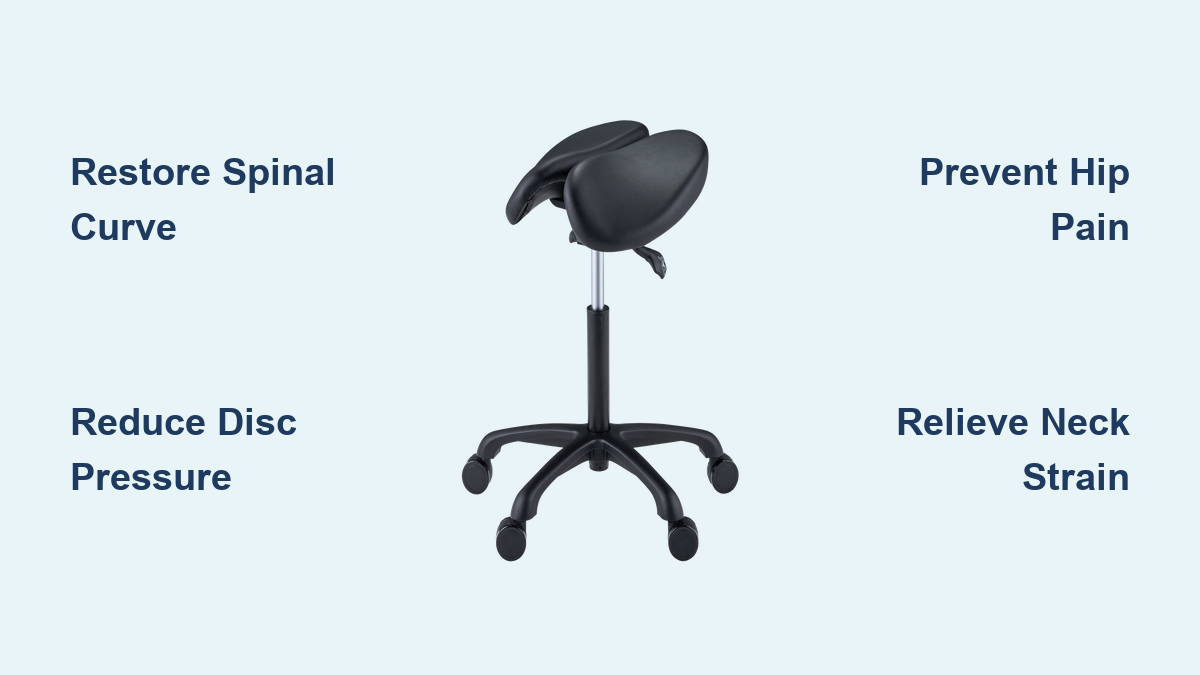
Dental professionals and office workers spend hours in seated positions that compromise spinal alignment and accelerate musculoskeletal wear. Traditional chairs force your pelvis into posterior tilt, flattening your natural lumbar curve and increasing disc pressure by up to 40% compared to standing. Saddle chair ergonomic benefits solve this fundamental problem by positioning your body in an open-hip angle that maintains spinal integrity while working. Research shows these specialized seats reduce low back pain in 50% of dental professionals who previously suffered from chronic discomfort. When you switch to saddle seating, your pelvis naturally tilts forward, restoring the lumbar lordosis that conventional chairs destroy. This simple biomechanical shift triggers a cascade of health improvements that protect your career longevity and enhance daily comfort.
The science behind saddle chairs reveals why they outperform traditional seating. With your thighs sloping downward at 110-135 degrees, your intervertebral discs experience pressure distribution much closer to standing values rather than the damaging compression of flat seats. This positioning prevents the adaptive shortening of hip flexors that plagues seated workers and eliminates the static muscle loading that causes painful trigger points. By encouraging subtle micro-movements throughout your workday, saddle chairs keep your core stabilizers engaged without causing fatigue—giving you the seated stability you need while preserving the dynamic movement your body requires.
Eliminate Disc Compression with Proper Hip Alignment
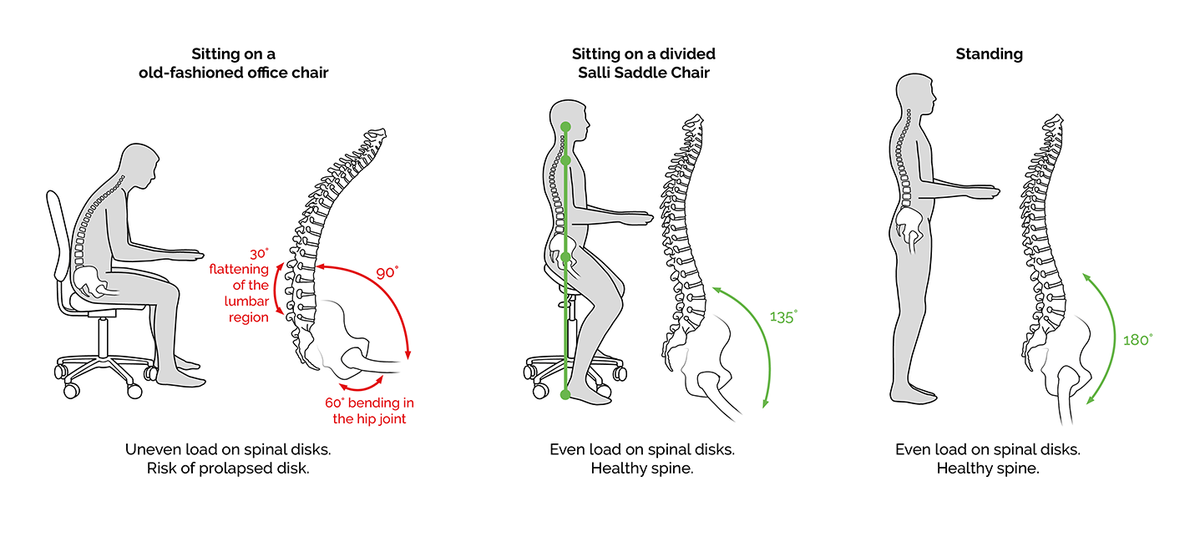
Saddle chairs solve the fundamental biomechanical flaw of conventional seating by creating the optimal hip-thigh angle that maintains natural spinal curvature. When you sit on a traditional chair, your thighs sit level or below your hips, forcing your pelvis into posterior tilt that flattens your lumbar curve and increases pressure on intervertebral discs. This sustained compression restricts nutrient exchange in the discs, accelerating degeneration over time. Saddle chairs reverse this damaging pattern by elevating your hips above your knees, creating the 110-135 degree open-hip angle that allows your spine to maintain its natural S-curve.
How Disc Pressure Changes With Saddle Seating
Research demonstrates that disc pressure varies dramatically depending on your sitting posture. Conventional chairs often create higher disc pressures than standing—contradicting the expectation that sitting should relieve spinal stress. The posterior pelvic tilt encouraged by flat seats increases shear forces on the lumbar spine while compressing the anterior portion of the discs. Saddle chairs eliminate this problem by promoting anterior pelvic tilt, which distributes weight evenly through the vertebral bodies and maintains proper disc hydration. This efficient load transfer means you can work longer hours with less accumulated strain and faster recovery between work sessions.
Preventing Adaptive Muscle Shortening
The hip flexor muscles, including your iliopsoas, undergo dangerous adaptive shortening when held in a flexed position for hours each day in conventional chairs. This shortening creates a permanent posterior pelvic tilt even when standing, fundamentally changing your walking biomechanics and contributing to lower back pain that seems to come from nowhere. Saddle chairs naturally stretch these critical muscles during use by positioning your thighs below hip level. This passive stretching occurs without conscious effort and counteracts the shortening that accumulates during other seated activities. Over weeks of consistent use, this maintained flexibility contributes to better overall posture and reduced strain on your lumbar spine.
Stop Hip Pain Before It Starts
Hip discomfort among seated professionals frequently stems from piriformis syndrome—a condition where the piriformis muscle compresses the sciatic nerve. This problem affects women at higher rates than men and creates a vicious cycle where sitting worsens the compression, leading to more pain and further movement avoidance. Saddle chairs effectively interrupt this destructive pattern by positioning your hip joint in a more extended angle that reduces compression of the piriformis muscle against the sciatic nerve. The forward-tilting position also promotes better circulation in your pelvic region and reduces static loading of hip flexor muscles that occurs with conventional seating.
Piriformis Syndrome Prevention Protocol
Preventing piriformis syndrome through proper seating represents an often-overlooked ergonomic intervention. Conventional chairs keep your hips flexed for hours, shortening the piriformis over time and increasing the likelihood of nerve compression. Saddle chairs maintain your hip in a more extended position that allows the piriformis to remain at its natural length. This positioning reduces mechanical compression of the sciatic nerve and decreases the likelihood of developing the buttock pain, numbness, and tingling that characterize this condition. For professionals who have already developed symptoms, switching to saddle seating often provides meaningful relief by removing the ongoing mechanical stress.
Hip Flexor Flexibility Maintenance System
The hip flexors play a crucial role in maintaining proper pelvic and spinal alignment, yet conventional seating keeps these muscles in a shortened position for hours each day. This chronic shortening leads to imbalances that affect your entire kinetic chain, from your lower back to your knees. Saddle chairs naturally stretch your hip flexors during use by positioning your thighs below hip level. This passive stretching occurs without conscious effort and helps counteract the shortening that accumulates during other seated activities. Over weeks of consistent use, this maintained flexibility contributes to better overall posture and reduced strain on your lumbar spine—without requiring additional stretching exercises.
Resolve Neck and Shoulder Pain at Its Source

The connection between spinal posture and neck health makes saddle chairs powerful tools for preventing cervical spine problems. When sitting in conventional chairs, professionals develop compensatory forward head positions to gain better visualization of their work area. This posture places excessive strain on cervical extensor muscles—every inch of forward shift effectively doubling the load on these muscles. Saddle chairs reduce this strain by elevating your viewing position and encouraging proper spinal stacking, allowing you to maintain a neutral neck position while still achieving necessary visual access.
Forward Head Posture Elimination
Forward head posture represents one of the most common postural deviations among seated professionals. The average adult head weighs 10-12 pounds, and when positioned forward of your center of gravity, this weight creates increasing leverage that strains your cervical spine. Saddle chairs reduce forward head posture by elevating your viewing position and encouraging vertical spinal alignment. With your spine properly stacked and shoulders back, your head naturally positions itself directly above your cervical spine rather than thrust forward. This alignment reduces workload on neck muscles and decreases mechanical stress on cervical discs that leads to chronic pain and early degenerative changes.
Shoulder Tension Relief Strategy
Shoulder tension frequently develops as a compensatory response to poor spinal posture. When your thoracic spine rounds forward and shoulders roll inward, your upper trapezius muscles must work harder to maintain arm function. This chronic overwork leads to trigger points, reduced blood flow, and persistent shoulder tension. By restoring proper spinal alignment throughout your thoracic and cervical regions, saddle chairs reduce the mechanical disadvantage causing shoulder muscle overwork. Your shoulders naturally roll back and down when your spine maintains its natural curves, allowing shoulder girdle muscles to function more efficiently. This improved mechanics translates to reduced fatigue at day’s end and less susceptibility to tension headaches.
Select Your Perfect Saddle Chair Match
Choosing the right saddle chair requires attention to your unique physical characteristics and work requirements. One size doesn’t fit all practitioners—your height, body proportions, and any pre-existing musculoskeletal conditions should guide your selection. Modern saddle chairs offer various adjustments including height range, seat angle, and sometimes lumbar support features. The ideal chair allows you to maintain feet flat on the floor with thighs sloping downward at the proper angle, with your work surface positioned to minimize reaching. Some models include gradient seat surfaces that provide additional pressure distribution for lateral movements during procedures.
Professional Stool Adjustment Checklist
Proper adjustment of your saddle chair is essential to realizing full ergonomic benefits. Begin by adjusting the height so your feet rest flat with thighs sloping downward at approximately 45 degrees. This creates the open-hip angle that generates biomechanical benefits. If your feet dangle or knees sit above hip level, the chair is too high; if you must reach down to the footrest, it’s too low. Experiment with small seat angle adjustments to find positioning that feels most natural for your body structure. Remember that proper adjustment may require several days of use before you fully appreciate benefits as your body adapts to new postural patterns.
Extend Your Career with Smart Ergonomic Choices
The physical demands of seated professions create accumulated stress that often forces practitioners to consider early retirement. Research consistently shows musculoskeletal disorders represent leading causes of reduced work hours and premature career exit among dental professionals. Implementing ergonomic interventions like saddle chairs addresses these risks proactively. Practitioners who prioritize ergonomic seating often continue productive careers well into their 60s and beyond, whereas peers who neglect ergonomic principles frequently experience career-limiting pain much earlier.
Quality of Life Transformation
The benefits of proper ergonomic seating extend far beyond your workplace. Professionals who experience less musculoskeletal strain during work hours arrive home with more energy for family activities and exercise. Reduced fatigue and pain improve sleep quality, increase participation in physical activities, and enhance overall life satisfaction. Many professionals who switch to saddle chairs report improvements in activities they’d previously abandoned due to pain—golf, gardening, and playing with grandchildren become enjoyable again when chronic pain resolves. These quality of life improvements represent the most meaningful outcome of ergonomic intervention—the ability to live fully both professionally and personally.
Final Note: Saddle chair ergonomic benefits deliver transformative results by addressing the root causes of seated work discomfort. When properly selected and adjusted, these specialized seats restore natural spinal alignment, reduce disc pressure, prevent hip problems, and eliminate neck strain—protecting your most valuable asset: your physical capacity to do the work you love. By incorporating saddle seating into your comprehensive ergonomic strategy, you invest in decades of pain-free productivity and enhanced quality of life both at work and beyond.
Leave a Reply