Best Ergonomic Office Chairs for Cross-Legged Sitting in 2026

Many conventional office chairs are designed around one basic sitting position: feet on the floor, thighs supported by the seat and arms resting beside the body. If you naturally sit cross-legged while reading, typing or working, that design can feel restrictive.
The better question is not simply whether a chair is “comfortable.” For cross-legged sitting, look at the usable seat area, front-edge shape, seat depth, armrest clearance and stability. A chair should also work when you return to a conventional feet-on-the-floor position.
Quick Picks
| Chair | Best for | Key reason |
|---|---|---|
| Pipersong Meditation Chair Plus | Dedicated cross-legged use | 17.5″ seat plus separate rotating footstool |
| GABRYLLY GY82766 | Wide-seat conventional chair | Wide seat and adjustable/reversible armrests |
| Branch Ergonomic Chair | Normal desk work + occasional position changes | 20″ seat width and 18–21″ adjustable seat depth |
| Steelcase Series 2 | Premium ergonomic alternative | 19–20″ seat width with 4D arms and adjustable seat depth |
What Makes a Chair Good for Cross-Legged Sitting?
Published seat width is only the starting point. What matters in practice is how much of the seat remains usable when your legs are folded and whether the chair’s arms or side structure get in the way.
1. A relatively open seat
A flat or less aggressively contoured seat gives your legs more freedom than a heavily bolstered bucket-style cushion.
2. Enough usable width
A wider seat can make folded-leg positions easier, but wider is not automatically better. The chair still needs to provide stable back support and fit your desk.
3. Appropriate seat depth
If the seat is too deep, you may lose comfortable back contact when you change position. Adjustable seat depth can make a conventional ergonomic chair more adaptable.
4. Arms that do not trap the knees
Fixed, low-positioned armrests can become the biggest obstacle. Flip-up, pivoting or multi-directional arms offer more flexibility.
5. A stable base
Changing leg position shifts your weight. A stable five-point base and properly adjusted seat height matter more than simply having a very wide cushion.
1. Pipersong Meditation Chair Plus — Best Dedicated Cross-Legged Chair

The Pipersong Meditation Chair Plus is the most purpose-built option in this group. Its design separates the main seat from a lower rotating footstool, allowing several sitting positions rather than forcing the legs into a conventional office-chair posture.
Seat width: 17.5″
Seat cushion: 4.2″ thick
Weight capacity: 250 lb
Footstool: 360° swivel
Warranty: 1-year limited warranty
Why it stands out: Pipersong explicitly designs the Plus for cross-legged, squatting, kneeling and other flexible positions. The separate footstool gives your lower legs a dedicated support surface instead of requiring them to remain on the floor.
Best for: Someone whose normal working style includes frequent alternative sitting positions.
Limitation: This is not a conventional task chair. If you want a traditional ergonomic chair with standard armrests and a conventional five-point office setup, another pick may be a better fit.
Check Price on Amazon2. GABRYLLY Ergonomic Office Chair with Footrest — Best Wide-Seat Conventional Option

The GY82766 takes a more conventional office-chair approach while adding a wide seat and reversible armrests. Its armrests can be folded or positioned to provide more space around the seat, which is useful when your knees or legs need additional clearance.
Overall dimensions: about 23.6″D × 29.9″W × 44.9″H
Seat depth: 20.5″
Seat width: approximately 21.6″ in the published dimension graphic
Weight recommendation: up to 400 lb on the manual page
Recline positions: 90°, 105°, 120°
Footrest: integrated slide-out design
Why it stands out: The combination of a wide seat and adjustable/reversible side wings gives cross-legged users more usable space than many traditional narrow task chairs.
Best for: Users who want a chair that can accommodate folded-leg sitting but still looks and operates like a conventional office chair.
Limitation: The seat is deep. Measure your desk and your preferred sitting position before buying, especially if you have limited desk depth.
Check Price on Amazon3. Branch Ergonomic Chair — Best for Normal Desk Work + Position Changes
The Branch Ergonomic Chair is not a dedicated cross-legged chair, but its relatively open 20-inch seat and adjustable 18–21-inch seat depth make it a useful option for people who want a conventional ergonomic chair and occasionally change leg position.
Overall: 25″W × 24″D × 38–42″H
Seat width: 20″
Seat depth: 18–21″
Seat height: 17–21″
Weight capacity: 300 lb
Why it stands out: Its adjustable seat depth allows you to tune the sitting surface for your normal posture. The 3D armrests also provide more adjustment than fixed armrests.
Best for: Someone who spends most of the day sitting conventionally but wants enough room to occasionally shift into a cross-legged position.
Limitation: It is not specifically designed for cross-legged sitting. If that posture is your primary working position, the Pipersong or a dedicated wide-seat design is more appropriate.
Check Price on Amazon4. Steelcase Series 2 — Best Premium Adjustable Alternative
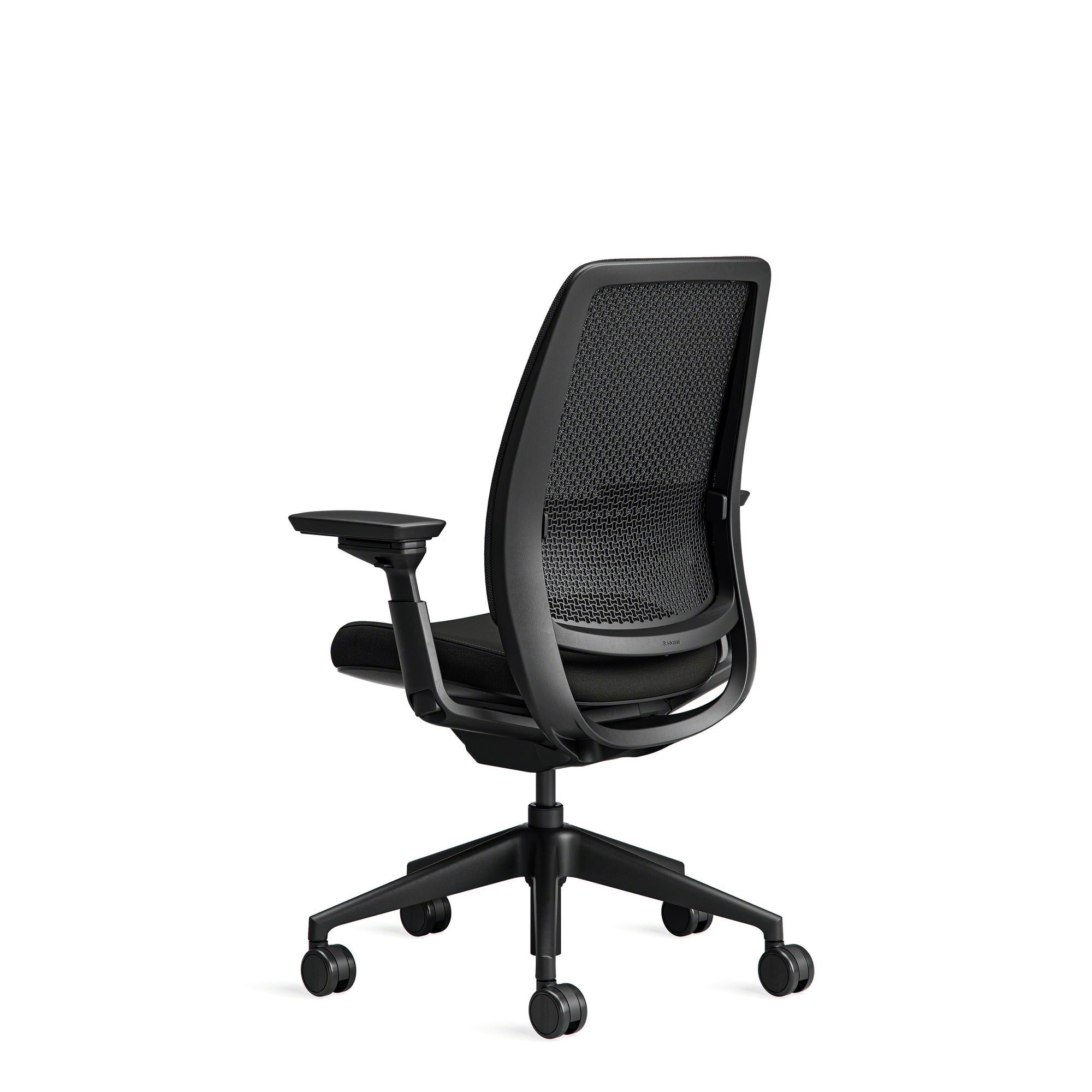
Steelcase Series 2 is another conventional task chair that can work for users who frequently change positions. Its seat width is around 19 inches in the published specification guide, while the fully adjustable arm configuration provides considerable freedom around the sides of the seat.
Overall width: 27″
Overall depth: 19.25–22″
Seat width: 19–20″ depending specification source/configuration
Functional seat depth: up to about 17.75″
Seat height: 16.5–21.5″ standard; optional lower range available
4D armrests: height, width, depth and pivot adjustment
Why it stands out: The 4D arms can move in multiple directions, allowing you to create more room around your legs when needed. Its adjustable seat also makes it a stronger all-round task chair than a chair designed only for alternative sitting.
Best for: Buyers who want premium ergonomic adjustability first and cross-legged flexibility second.
Limitation: The seat is not as wide as dedicated cross-legged chairs. This is an adaptable task chair, not a criss-cross specialist.
Check Price on AmazonDedicated Cross-Legged Chair vs. Conventional Ergonomic Chair
| Feature | Dedicated cross-legged design | Conventional ergonomic chair |
|---|---|---|
| Alternative sitting | Usually the primary design goal | Secondary consideration |
| Seat width | Often wider or more open | Usually optimized for conventional sitting |
| Armrests | May flip, move or be absent | Usually fixed or multi-axis |
| Back support | Can be simpler | Usually more developed for desk work |
| Best for | Frequent posture changes | All-day conventional desk work with occasional position changes |
How to Choose the Right Seat Width
Do not compare seat width alone. Measure the area you actually use when sitting in your preferred position.
- Seat width between the side edges or arm structures.
- Seat depth from the backrest to the front edge.
- Whether your knees collide with the armrests.
- Whether the front edge presses into your legs when they are folded.
- Whether the chair still lets you sit normally with both feet on the floor.
What About Sitting With One Leg Tucked Under You?
This position creates a different clearance requirement from simply crossing your ankles. Your thigh, knee and ankle occupy more of the seat area, so a narrow cushion or aggressive side bolsters can feel restrictive.
If you frequently use this position, an open seat with fewer side restrictions may be more practical. But you should still change positions regularly rather than treating one alternative posture as the only correct position.
Common Mistakes
1. Choosing a chair only because the seat looks wide
Width does not guarantee useful space. Armrests, side structures and seat depth can still restrict your legs.
2. Ignoring normal sitting
Your chair should remain comfortable and supportive when you return to feet-on-the-floor sitting.
3. Buying a deep chair for a shallow desk
A wide or deep cross-legged chair can create the same clearance problems covered in our shallow-desk guide.
4. Treating “cross-legged” as a medical solution
A chair designed for alternative sitting should not be marketed as a treatment for a medical condition. This guide is about fit, freedom of movement and personal seating preference.
Frequently Asked Questions
What is the best ergonomic chair for cross-legged sitting?
For dedicated cross-legged use, the Pipersong Meditation Chair Plus is the most purpose-built option in this guide. For users who want a conventional ergonomic task chair as well, Branch Ergonomic Chair and Steelcase Series 2 are more traditional choices.
Do I need an armless chair to sit cross-legged?
No. An armless chair can provide more open space, but adjustable or reversible arms can also work. The important point is whether the arms interfere with your knees and legs in your preferred position.
Is a wide seat always better?
No. A wider seat can provide more freedom, but excessive width can make it harder to use the backrest effectively or fit the chair under a desk. Match the seat to your actual sitting position and workstation.
Can I use a normal ergonomic chair for cross-legged sitting?
Yes, if the seat and arm configuration leave enough usable space. Chairs with adjustable seat depth and multi-directional arms are generally easier to adapt than highly contoured chairs with fixed side structures.
Should I sit cross-legged all day?
There is no reason to force yourself to stay in one position. The practical advantage of a flexible chair is that it lets you change positions. Alternate between your preferred posture and conventional feet-on-the-floor sitting.
Final Verdict
The best chair for cross-legged sitting depends on whether cross-legged sitting is your primary seating style or simply one of several positions you use during the day.
Pipersong Meditation Chair Plus is the clearest choice when alternative sitting positions are the main reason you are shopping.
GABRYLLY GY82766 is a more conventional wide-seat option with adjustable side wings and an integrated footrest.
Branch Ergonomic Chair makes more sense when normal desk ergonomics are the priority and cross-legged sitting is occasional.
Steelcase Series 2 is the premium conventional task-chair choice for buyers who want extensive adjustment and some additional freedom around the seat.
Research note: ErgonomicBest does not claim hands-on testing of these products. Product specifications in this guide are based on manufacturer documentation and product/manual sources. Exact Amazon configurations can change, so verify the current listing before purchase.