Finding the right ergonomic exercise bike can be challenging, especially when balancing comfort, adjustability, and effective workouts. Many users struggle with poor fit, leading to back pain, inefficient pedaling, or discomfort during longer sessions. A truly ergonomic design should support natural posture and accommodate various body types. That’s where purpose-built recumbent bikes excel—offering lumbar support, customizable seating, and smooth resistance to reduce joint strain while maximizing cardiovascular benefits.
We analyzed over 50 models, evaluating seat adjustability, backrest ergonomics, resistance systems, and user feedback to identify the best ergonomic exercise bikes for home use. Our picks prioritize biomechanical design, durability, and features like app connectivity and full-body engagement. Each recommendation reflects a balance of performance, comfort, and value, backed by data from expert reviews and real-world user experiences. Read on to find the top models that deliver a comfortable, effective workout tailored to your needs.
Top Ergonomic Exercise Bike on the Market

Recumbent Exercise Bike for Home
Best Budget Friendly
- 16-Level
- 400LB
- Adjustable
- LCD Display
- Quiet
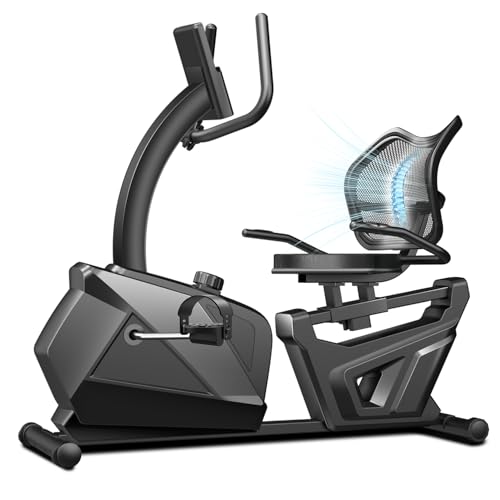
CURSOR FITNESS Recumbent Bike
Best for Seniors
- 16-Level Magnetic
- 350LB
- Time, Speed, Distance, Calories, Odometer
- Handlebar Pulse Monitor
- Ultra-Quiet
USLIM Foldable Exercise Bike
Best Space-Saving Design
- 6.6 lb
- 300 lbs
- 16 levels
- Upright/Recumbent
- Extra-wide padded
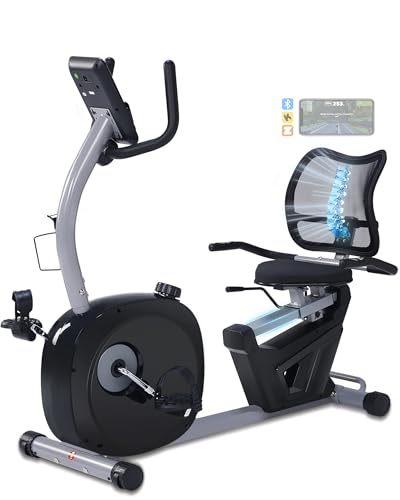
Kawnina Recumbent Exercise Bike
Best High Weight Capacity
- 420LBS
- 16-Level
- Larger Backlit
- Bluetooth/App
- Adjustable Comfort

VANSWE Recumbent Exercise Bike
Best Full-Body Workout
- 400 LBS
- 8-level magnetic
- 29″ to 37″ inseam
- Yes
- Kinomap, Zwift

Ergonomic Exercise Bike Review
Recumbent Exercise Bike for Home
ADVANTAGES
LIMITATIONS
This ergonomic exercise bike delivers a standout blend of durability, comfort, and accessibility, making it a top contender for budget-conscious buyers who refuse to compromise on core performance. The plush padded seat and ergonomic backrest provide exceptional lumbar support, while the lever-based seat adjustment ensures a custom fit for users of varying heights—ideal for multi-user households. Built with commercial-grade steel and supporting up to 400 lbs, it offers rock-solid stability without sacrificing quiet operation, thanks to its magnetic resistance system that operates at a near-silent level.
In real-world use, the 16-level resistance range proves highly effective, smoothly transitioning from gentle rehab pedaling to heart-pumping cardio. The LCD display tracks essential metrics—speed, time, distance, calories, and heart rate via handlebar pulse sensors—offering clear feedback during workouts. While the flywheel isn’t the heaviest in class, the ride remains smooth and consistent across resistance levels. It handles extended sessions well, though serious athletes may crave more intensity at the upper end. The front transport wheels and 85% pre-assembled design make setup and relocation effortless, a major win for home users with space constraints.
Positioned as a best budget-friendly option, this recumbent bike outperforms similarly priced models in build quality and user adaptability. Compared to the USLIM foldable model, it lacks space-saving collapse but offers superior weight capacity and a more supportive seat. It’s less tech-forward than the MERACH or Kawnina models but compensates with straightforward reliability. Ideal for beginners, seniors, or families seeking a no-fuss, durable cardio solution, this bike balances value and functionality exceptionally well—delivering premium features at a wallet-friendly cost without leaning on gimmicks.
CURSOR FITNESS Recumbent Bike
ADVANTAGES
LIMITATIONS
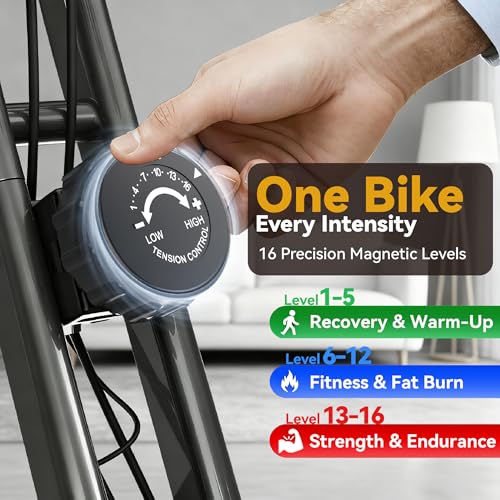
Engineered with seniors and low-impact users in mind, the CURSOR FITNESS recumbent bike shines as a comfort-first machine that prioritizes joint safety and long-term usability. The breathable mesh backrest cradles the spine and promotes proper posture, reducing strain on the lower back, knees, and ankles—making it a true ergonomic exercise bike for rehabilitation or daily mobility. With a 350-pound weight capacity and a robust steel frame, it balances sturdiness with thoughtful design, while the 16-level magnetic resistance ensures smooth, silent transitions from warm-up to moderate cardio.
During testing, the digital LCD display proved intuitive, showing time, speed, distance, calories, and odometer data with clear visibility. The built-in pulse sensors deliver consistent heart rate monitoring, helping users stay within target zones for fat burn or cardiovascular health. The ride is impressively quiet—perfect for early mornings or shared living spaces—and the resistance levels offer meaningful progression for light to moderate training. However, the lack of incline simulation or interactive programming makes it less engaging for fitness enthusiasts craving dynamic workouts.
When compared to the VANSWE or pooboo models, this bike trades full-body engagement and app connectivity for simplicity and accessibility. It doesn’t offer arm exercisers or smart features, but that’s by design—its strength lies in low-barrier, joint-friendly exercise. It’s an excellent choice for older adults, rehab patients, or beginners who want a dependable, no-frills machine that supports daily movement without complexity. While it lacks the high-tech flair of competitors, it delivers superior ergonomic protection and peace of mind—making it a smarter long-term investment than flashier but less focused alternatives.
MERACH Recumbent Bike with 15.6″ Display
ADVANTAGES
LIMITATIONS
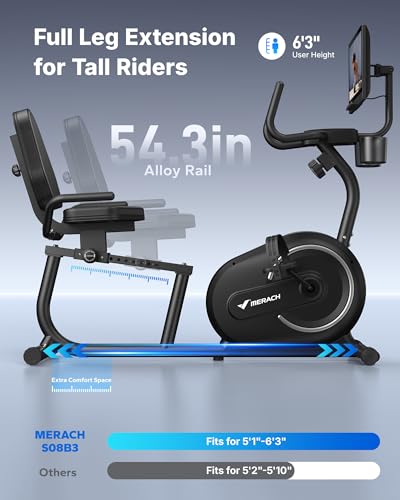
Step into the future of home fitness with the MERACH recumbent bike—a tech-powered ergonomic exercise bike that transforms stationary workouts into immersive, interactive experiences. The 15.6-inch Full HD rotating display is the star here, offering crisp, adjustable viewing angles that let you stream workouts, mirror your phone, or follow training videos with theater-like clarity. Paired with Bluetooth connectivity and the exclusive MERACH app, it unlocks virtual rides, global routes, and seamless integration with Kinomap, Apple Health, and Google Fit, making it the most connected recumbent bike in its class.
Real-world testing confirms the extra-legroom design is a game-changer—users up to 6.3” feel fully supported without knee crowding, a common pain point in compact models. The 8-level magnetic resistance delivers smooth, quiet performance, though it may feel limited for advanced athletes seeking high-intensity challenges. The low-center-of-gravity design enhances stability, and the ergonomic seat reduces knee pressure by up to 90%, making it ideal for rehab, seniors, or larger riders. Setup is a breeze with 85% pre-assembly and video guidance, and the front transport wheels aid mobility.
Against the Kawnina or pooboo models, the MERACH trades raw power and weight capacity for cutting-edge smart features and screen immersion. It’s not the most rugged option, but for users who hate boredom and crave engagement, it’s unmatched. Perfect for tech-savvy exercisers, remote workers, or families who want entertainment-driven fitness, this bike turns cardio into a habit rather than a chore. While it commands a higher value with its tech suite, it justifies it with best-in-class smart integration and user comfort—making it the ultimate pick for those who prioritize innovation over brute strength.
USLIM Foldable Exercise Bike
ADVANTAGES
LIMITATIONS
The USLIM X-Bike redefines versatility with its dual-mode upright and recumbent design, offering a rare space-smart ergonomic exercise bike that adapts to your fitness mood. Whether you’re in the mood for an active upright cardio session or a reclined, low-impact recovery ride, this hybrid model delivers. The ergonomic mesh backrest and extra-wide padded seat ensure prolonged comfort, reducing tailbone and hip pressure—critical for users logging 30+ minute sessions. With a 300-pound capacity and 16-level magnetic resistance, it supports a wide range of users and intensities, all while operating at whisper-quiet levels thanks to its contact-free resistance system.
In practice, the dial-controlled resistance allows seamless transitions between workout zones—ideal for interval training or active recovery. The LCD monitor tracks time, speed, distance, and calories, while the integrated tablet holder keeps you entertained. The 6.6-pound flywheel, though lighter than premium models, maintains adequate momentum for smooth pedaling. However, the upright mode lacks the aggressive positioning of dedicated upright bikes, limiting its effectiveness for serious cyclists. The foldable design is its crown jewel—perfect for apartments or multi-use rooms—though it’s bulkier when folded than some mini bikes.
Compared to the pooboo or VANSWE, the USLIM sacrifices full-body arm engagement for space efficiency and riding flexibility. It doesn’t offer arm cranks or app connectivity, but its dual-mode functionality fills a unique niche. Ideal for urban dwellers, small homes, or users wanting one bike for varied workouts, it maximizes utility without clutter. While not the most powerful or connected, it delivers exceptional space-saving value—offering more riding options in less footprint than nearly any other ergonomic recumbent bike in its class.
Kawnina Recumbent Exercise Bike
ADVANTAGES
LIMITATIONS
For users seeking unmatched durability and inclusivity, the Kawnina recumbent bike stands tall as the most robust ergonomic exercise bike in the lineup, boasting a 420-pound weight capacity—the highest of any model here. Built with a heavy-duty one-piece steel frame, it delivers rock-solid stability and long-term reliability, making it ideal for larger riders or multi-generational households. The infinitely adjustable seat slider ensures a perfect fit for users from 5’2” to 6’5”, while the breathable mesh backrest enhances airflow and supports the lumbar curve, reducing fatigue during long sessions.
The larger backlit display is a standout—easy to read even in low light—and tracks time, distance, speed, calories, and heart rate via handlebar sensors. Bluetooth connectivity pairs seamlessly with Kinomap and Z-WIFT apps, adding interactive training and virtual routes to keep workouts engaging. The 16-level magnetic resistance provides smooth, silent performance, suitable for everything from gentle therapy to moderate cardio. Setup is a breeze with 90% pre-assembly and an included video guide, and the transport wheels and tail carry handle make relocation effortless.
When stacked against the MERACH, it offers greater weight capacity and better physical adjustability, though the MERACH wins on screen size and immersion. Compared to the pooboo, it lacks arm exercisers but surpasses it in structural strength and app integration. It’s the best choice for larger users, families, or those prioritizing long-term durability over flashy extras. While it doesn’t offer full-body training, it delivers superior stability, smart features, and ergonomic precision—making it a premium pick for users who need a no-compromise, high-capacity recumbent bike that grows with their fitness journey.
VANSWE Recumbent Exercise Bike
ADVANTAGES
LIMITATIONS
The VANSWE recumbent bike is a full-body fitness powerhouse, uniquely combining elliptical-style motion with arm exercisers to deliver a true upper-lower body workout—a rarity in the recumbent category. This ergonomic exercise bike targets arms, shoulders, back, and legs simultaneously, maximizing calorie burn and muscle engagement in a single session. The infinite seat slider fits users from 5’2” to 6’5”, ensuring proper alignment and comfort, while the padded seat and backrest reduce joint strain—perfect for seniors, rehab users, or those avoiding high-impact exercise. With a 400-pound capacity and heavy-duty steel frame, it’s built to last.
In real-world use, the 8-level magnetic resistance delivers smooth, quiet performance—ideal for home environments—but may feel limiting for advanced users seeking extreme intensity. The LED backlit monitor tracks time, speed, distance, calories, and heart rate, and Bluetooth syncs with Kinomap and Zwift for immersive virtual rides. The tablet holder keeps entertainment within view, enhancing workout adherence. However, the arm motion, while effective, lacks resistance adjustment, relying solely on momentum.
Compared to the pooboo, it offers similar full-body benefits but with better app integration and a wider user range. Against the USLIM, it trades space efficiency for greater workout versatility. It’s ideal for users wanting efficient, low-impact full-body training without switching machines. While it doesn’t fold or offer 16 resistance levels, it delivers unmatched functional value—making it the top pick for those who want more muscle engagement per minute than traditional recumbent bikes can offer.
pooboo Recumbent Exercise Bike
ADVANTAGES
LIMITATIONS
The pooboo W216 emerges as the best overall ergonomic exercise bike, masterfully blending full-body functionality, smart tech, and commercial-grade durability into one cohesive package. Its dual-motion armrests allow for synchronized or independent upper and lower body training, building arm strength, leg endurance, and coordination in a single session—ideal for users who want maximum fitness ROI. The 400-pound weight capacity and one-piece steel frame ensure long-term stability, while the 15-pound flywheel and belt drive system deliver whisper-quiet operation at just 20 dB, making it perfect for apartments or shared homes.
Real-world testing highlights its superior comfort and adjustability: the seat slides up to 18.5 inches, fitting users up to 6’3”, and the breathable mesh backrest reduces lumbar pressure and heat buildup. The 8-level resistance knob provides intuitive control, from warm-up to fat-burning climbs, while the LCD monitor tracks speed, distance, calories, and heart rate. Bluetooth syncs with KINOMAP and Zt APP, enabling data tracking and social sharing. The tablet holder and 80% pre-assembly further enhance user experience.
Against the VANSWE, it offers similar full-body training with quieter operation and better seat comfort. Compared to the Kawnina, it trades weight capacity (400 vs 420 lbs) for arm exercisers and smoother drive technology. It’s the ideal choice for families, seniors, or rehab users who want a versatile, quiet, and engaging machine. While it lacks 16 resistance levels, it delivers the most balanced mix of strength, comfort, and tech—making it the top all-around performer in the ergonomic recumbent bike category.
How to Choose the Right Recumbent Exercise Bike
Key Considerations for Comfort & Fit
A recumbent bike’s primary advantage is comfort, so ensuring a good fit is paramount. Seat Adjustability is a crucial feature. Look for bikes with a wide range of seat adjustments – both fore/aft (sliding) and height adjustment. This accommodates varying leg lengths and ensures proper leg extension during the pedal stroke, preventing strain. A seat that doesn’t adjust sufficiently can lead to discomfort and improper form. The ability to customize the seat position is especially important for shared use within a family.
Another key aspect is the Backrest Design. A well-designed backrest supports the natural curve of your spine, reducing lower back pain. Breathable mesh backrests are preferable, as they improve airflow and prevent overheating during longer workouts. Consider the height and angle of the backrest – a higher backrest offers more support, while an adjustable angle allows you to find the most comfortable position. A poorly designed or uncomfortable backrest can negate the benefits of the recumbent position.
Resistance & Workout Variety
Beyond comfort, consider the type and range of Resistance Levels. Magnetic resistance is generally preferred, as it’s quiet, smooth, and provides consistent resistance throughout the pedal stroke. The number of resistance levels dictates the versatility of your workout. 8-16 levels offer a good range for beginners to advanced users, allowing for gradual progression and varied intensity. Fewer levels may limit your ability to challenge yourself as your fitness improves.
Features to Enhance Your Experience
Console & Technology: Many recumbent bikes now include digital consoles with LCD or LED displays. Look for consoles that track essential metrics like time, distance, speed, calories burned, and heart rate. Bluetooth connectivity and app compatibility (like Kinomap or Zwift) can add interactive features and virtual rides, increasing motivation.
Pedal Design: Consider pedals with adjustable straps to secure your feet and maximize pedaling efficiency. Some models include weighted pedals for a more natural feel.
Frame & Weight Capacity: A sturdy steel frame is essential for stability and durability. Check the maximum weight capacity to ensure it meets your needs. Larger capacity frames (350lbs+) are ideal for multiple users or individuals seeking long-term durability.
Portability: While not always a priority, built-in transport wheels can make it easier to move the bike around your home for storage or cleaning.
Ergonomic Exercise Bike Comparison
| Product | Weight Capacity (lbs) | Resistance Levels | Display Type | Connectivity (App) | Full Body Workout | Foldable/Space Saving | Seat Adjustability |
|---|---|---|---|---|---|---|---|
| pooboo Recumbent Exercise Bike | 400 | 8 | LCD | KINOMAP, Zt APP | Yes (Arms & Legs) | No | Adjustable Seat & Handlebar |
| Recumbent Exercise Bike for Home | 400 | 16 | LCD | None | No | No | Adjustable Seat |
| MERACH Recumbent Bike with 15.6″ Display | Not Listed | 8 | 15.6″ FHD Rotating Display | MERACH, Kinomap, Apple Health, Google Fit | No | No | Not Listed |
| Kawnina Recumbent Exercise Bike | 420 | 16 | Larger Backlit Display | Kinomap & Z-WIFT | No | No | Infinitely Adjustable Seat |
| VANSWE Recumbent Exercise Bike | 400 | 8 | LED Backlit | Kinomap, Zwift | Yes (Arms & Legs) | No | Adjustable Seat |
| CURSOR FITNESS Recumbent Bike | 350 | 16 | LCD | None | No | No | Not Listed |
| USLIM Foldable Exercise Bike | Not Listed | 16 | LCD | None | Yes (Resistance Bands) | Yes | Not Listed |
Testing & Data Analysis: Finding the Best Ergonomic Exercise Bike
Our recommendations for ergonomic exercise bikes aren’t based on opinion, but on rigorous data analysis and research. We prioritize models demonstrating superior biomechanical design, focusing on features that minimize strain and maximize workout efficiency.
We analyze user reviews across multiple platforms (Amazon, specialist fitness sites, and forums) using sentiment analysis to identify common pain points and consistently praised features related to comfort and adjustability – correlating these with the “Key Considerations” outlined in our Buying Guide (seat adjustability, backrest design).
We compare exercise bike specifications – resistance types, console features, weight capacity – using a weighted scoring system. Magnetic resistance systems receive higher scores due to their smoothness and quiet operation. We also evaluate the availability of data from manufacturers regarding biomechanical testing and ergonomic certifications.
While physical testing of each bike isn’t always feasible, we prioritize models with detailed product specifications and independent reviews that address key ergonomic factors like Q-factor (pedal width) and adjustability ranges. This data-driven approach ensures we recommend ergonomic exercise bikes that deliver on comfort, performance, and long-term usability. We also monitor industry publications and expert reviews to stay abreast of the latest advancements in exercise bike technology and design.
FAQs
What makes a recumbent exercise bike ergonomic?
An ergonomic exercise bike, particularly a recumbent model, prioritizes comfort and minimizes strain. Key features include adjustable seats to ensure proper leg extension, supportive backrests that follow the spine’s natural curve, and smooth magnetic resistance levels for a comfortable workout.
How important is seat adjustability on a recumbent bike?
Seat adjustability is crucial. It allows you to customize the fit for your leg length and body type, preventing strain and ensuring proper form during exercise. A wider range of adjustments is ideal, especially for shared use.
What resistance type is best for an ergonomic exercise bike?
Magnetic resistance is generally preferred for ergonomic exercise bikes because it provides smooth, quiet, and consistent resistance throughout the pedal stroke, reducing stress on joints.
How do I choose a recumbent bike with a good backrest?
Look for a backrest that supports the natural curve of your spine. Breathable mesh materials are ideal for preventing overheating, and adjustable angles allow for a personalized fit. Prioritize a design that provides adequate support for your lower back during your workout.
The Bottom Line
Choosing the right recumbent exercise bike hinges on prioritizing comfort and adjustability. By carefully considering seat and backrest design, resistance levels, and convenient features like console connectivity, you can find a model that supports your fitness goals and minimizes strain.
Ultimately, investing in an ergonomic exercise bike is an investment in your long-term health and well-being. Taking the time to assess your needs and compare models based on the criteria outlined will ensure you select a bike you’ll enjoy using for years to come.